Chapter 6
"Humbel" Petitioners and "Litigeous" Persons
Southern Avalon Women and Encounters with Formal Justice

Historians of women have demonstrated that the British legal system in the eighteenth and nineteenth centuries was a patriarchal regime dominated by male legislators, judges, lawyers, and juries.1 Women were subject to the authority of the law, but had no formal political voice or access to elected or appointed office at any level. Discriminatory laws, designed by male legislators and enforced by male jurists, reinforced women's subservient status in society. The married woman was most subordinate of all. Under the principle of coverture, her legal identity was absorbed by that of her husband. She could not hold property in her own right, enter into contracts, sue or be sued in a court of law. She did not even have the right to control her own body. Certainly, she had no legal status in civil actions in the courthouse. At best, the historiography tells us, she could rely on personal influence in the home and discretionary forms of justice to provide her with indirect access to the formal legal system.2
However, while women's status within the legal system was indisputably secondary, they were not denied access entirely. Yet there is a tendency in the literature to focus almost exclusively on two tragic images: the female victim of crime, and the female casualty of discriminatory matrimonial laws—both, vulnerable in a system stacked against them.3 Presenting the female crime victim as powerless, however, overlooks the agency of many of these women in taking their abusers into public court settings in pursuit of justice. And using the experiences of married women to generalize about the reception of all women also distorts the picture, leaving the reader with the impression that women were virtually excluded from the legal system altogether. Granted, the majority of women passed through the married state in adulthood; but many also spent adult years as single women and widows, life-stages in which they would have had greater access to the legal system. Furthermore, coverture was not always strictly enforced at the local level, and it is therefore important to investigate how formal justice played out on the ground within specific historical contexts.
So let us adjust our focus to examine women's encounters with the formal justice system on the southern Avalon, with an eye to their capacity to negotiate the complexities of the system and the response of authorities to their efforts.4 At the start, however, some parameters must be established. Women in Newfoundland had no formal political voice throughout the study period and therefore had no input into the making of statutory law (a deficiency they shared with all inhabitants of the island, regardless of gender or class, until representative government was granted in 1832). Women on the island did not hold office, either local or central (a disability shared with Catholics until 1829). They did not sit on petty or grand juries. They were subject to virtually the same statutory regime as women in other British jurisdictions.5 Yet they were present in the court system, as civil litigants, as complainants and defendants in criminal matters, as witnesses, and as petitioners.6 Far from being excluded from the system, women on the southern Avalon, especially plebeian women, were a vital part of local court life, and the courtroom was more often a site of their empowerment than their oppression.7
^topCivil Litigation
When generalizations are made from married women's experiences about access to the court system, the image of the female civil litigant rarely surfaces because married women had no formal legal status separate from their husbands' until the late nineteenth century. On the southern Avalon, however, the involvement of women in civil litigation, although not as frequent as men's, was quite extensive from the mid-eighteenth to the mid-nineteenth century. Their participation fell primarily within the categories of debt collection, employment disputes, landlord-tenant matters, and trespass.8
Debt Collection
5Women or their estates appeared quite frequently in litigation involving debt, emerging as creditors or debtors in 104 cases during the study period. Table 6.1 provides a breakdown of creditor/debtor status in these cases, and indicates that there were 76 women creditors (individual and joint) and 36 women debtors (individual and joint), giving a total of 112 female parties to the collection actions recorded.9 This suggests that women were twice as likely to be creditors as debtors, a finding that is somewhat at variance with the stereotypical image but not altogether surprising, given the extent of their participation in the economic life of their communities. The causes of action varied, although the greatest activity (when specified) occurred in the areas of washing and/or sewing services, merchant or shop accounts, estate matters, landlord-tenant matters, and bonds/book debts/mortgages/bills of exchange, as indicated by Table 6.2. The majority of the debts (64.4 percent) were amounts under £10, but there were a significant number of big-ticket actions, with two of the cases involving amounts in excess of £200 (see Table 6.3).
There was only one recidivist debtor among the cases surveyed, but there were several repeat creditors. Collection actions became something of an occupational hazard for Jane Austen (also Austin), for example, as she sued eight different debtors during the 1830s and 1840s for goods sold and delivered from her shop in Ferryland (all for amounts under £4).10 Margret Kenny of Ferryland was busily tidying up her affairs in the Ferryland area at the turn of the nineteenth century, possibly just after joining her husband, who had entered the Newfoundland Regiment at St. John's. During 1799-1800, she sued five local individuals: four actions, with unspecified causes, were for amounts in the £3-5 range; the fifth and final action was for £20 for rent and damages in relation to a plantation in Ferryland, but she was non-suited, the court finding her to be a "litigeous person" and ordering her to pay 40s. to the defendant.11 Catherine Weston, an Irish Catholic woman who had married into a powerful English Protestant merchant-planter family, initiated three separate suits (through her attorney) for the collection of amounts ranging from £50.18.3-3/4 to £109.4.5 in the period from 1787 to 1790.12 Another gentry woman, Ann Sweetland, initiated two smaller actions to recover monies for the sale of ground (40s.) and rent arrears (£6.19.6) in 1798.13 The estate of Mary Ludwigg (or Ludwick), an Irish Protestant woman who had considerable property and financial interests in the area, appeared as creditor in the 1750s and 1760s in four separate matters involving mortgage arrears of substantial amounts (£60, £109, and £167.4.0) and the adjustment of book debts with another wealthy Irish Protestant landowner and businessman in the area.14 And Ferryland washerwomen Mary Bryan appeared in court personally to sue two of her customers in 1803 for amounts which, though unspecified, would likely have fallen in the 12-15s. range normally paid to laundresses at that time.15
As the above examples suggest, ethnicity and class were often factors underlying the types of action that were brought. All the women who sued for washing and/or sewing services as well as nursing/midwifery services were from the plebeian community, predominantly from Irish backgrounds or English families that had been assimilated by the time their respective suits were initiated. Women of the local elite (English Protestant and Irish Protestant) were much more prominent in estate matters and collections involving rent, book debts, mortgages, and bonds. The latter were almost exclusively the creditors and debtors in suits involving amounts of £100 and over (Hannah McDaniel was the only exception; see below). Plebeian women were overwhelmingly involved in suits under £10; however, they were also a robust presence in the middle band, being represented in roughly two-thirds of the suits involving amounts from £10 to £49 and one-half the suits involving amounts from £50 to £99.
Marital status was also a factor that determined whether these women had legal status in their actions. While all the debts in question were owed to or by women (either individually or jointly with husbands), not all these women appeared personally in the collection actions. In accordance with the principle of coverture, husbands often represented their wives in such matters. In the fall of 1818, for example, Mrs. Dollard was owed money for washing services provided to John Neile's fishing servants (one Comerford and others) at Fermeuse; but it was her husband, John, who sued the employer for some fish allegedly left on Neile's fishing room by Comerford to pay his debt—although Mrs. Dollard had herself initially gone to Neile's premises and demanded that Comerford pay her.16 Case File 12 In the eyes of the law, husbands also assumed responsibility for their wives' debts upon marriage. For example, when Mrs. William Coleman ordered two blankets from merchant Samuel G. Carter and neglected to pay her account, it was Mr. Coleman who was sued and ordered to pay the debt, even though he claimed (and the plaintiff could not disprove) that he had no knowledge of the order.17 Case File 13 The husband's responsibility even extended to debts contracted before marriage. In 1818, for example, the court ordered John Power to pay a debt of £3.5.3 that had been incurred by his wife, Margaret Neill, before they had wed. Indeed, although Margaret had property (a bed) from her previous marriage, it was attached only when it was demonstrated that John did not have sufficient property of his own to secure payment of his wife's debt.18 Case File 14
Still, of the 112 total female creditors and debtors examined here, only 20 (18 percent) were represented by husbands acting as legal agents (either for the wife only or for the couple) under the law of coverture. Another 8 (7 percent), all women of local merchant-planter families, were named parties in the actions but were represented by guardians, brothers, or attorneys in the courthouse, reflecting a general tendency for elite women to avoid the public courtroom, regardless of marital status. The remaining 84 female creditors and debtors (75 percent) represented themselves. The relatively low number of actions in which husbands acted for wives suggests that there may have been a disproportionate number of single or widowed women among the litigants; but it also hints that the principle of coverture may have been occasionally relaxed in southern district courts.
10Unfortunately, a lack of comprehensive parish registers makes it impossible to track such a phenomenon, but the proportions are suggestive. This was certainly the case with Hannah McDaniel, who acted as petitioner and attorney for her family when financial difficulties arose over an alleged debt to the Weston family (see below). And even in cases in which wives were not named as legal agents, women sometimes acted as important witnesses when disputes arose as to the validity or amount of a debt (see below). Furthermore, while formal law recognized the husband as the legal agent in collection actions (and whether or not this principle was relaxed by local courts), the control of household finances often played out differently on the ground, for in many fishing families, it was the wife who managed whatever small amounts of cash were on hand. Thus, while a wife from the plebeian community may have been required by law to send her husband to court to collect money owed to her, this did not necessarily signal a relinquishment of control over that money in the same way that it did for many middle-class women.
Certainly, the local courts did not apply the principle of coverture as a blanket treatment in inappropriate circumstances. In 1818, for example, Hunt, Stabb, Preston, an English mercantile firm operating out of Renews, discovered that they had relied too heavily on the application of coverture when they brought a collection action against the estate of Thomas Beaves to recover a balance of £70 (raised to £78.9.0 the following month). Case File 15 The plaintiffs stated that when Beaves had died in 1810, he had been indebted to the firm in the amount of £65; the remainder of the debt had been incurred by his widow, Elizabeth, since that time, under the head of "Elizabeth Beaves and Son." In her defense, Elizabeth argued that the firm had made no claim to her in relation to her husband's debt since his demise. The debt was of such long standing, she continued, that the firm had exceeded the statutory time limit for collection. She herself had maintained credit balances in her account with the plaintiffs since her husband's death until 1817, when she, too, had fallen into debt in the economic malaise following the Napoleonic Wars. The firm had proceeded to sell, at public auction, her fishing room, house, and gardens—property that had been left to her by her mother—and had itself purchased the premises for £28 to be applied towards her husband's debt. The sale had been made without her consent, Elizabeth claimed, and without lawful authority, and she asked that she be put back in possession of her property.
The magistrates reserved judgment until various documents were produced, and the evidence did little to ingratiate Hunt, Stabb, Preston to the court. Since 1810, the firm had been registering various accounts with the court in relation to Thomas's debt to continue them, and thus to prevent the applicability of the statutory limitation period. And it had done so without Elizabeth's knowledge. The court found that regardless of the "ingenuity" with which the firm had attempted to carry over Thomas's debts, "this Court is ever awake to prevent their effect being extended beyond legal bounds," and the statute of limitations was therefore, as Elizabeth had argued, a bar to the debt. Furthermore, the court found that the property sold under auction had indeed been left to Elizabeth by her mother's last will and testament. Elizabeth's late husband had never exercised any right to the property; furthermore, Hunt, Stabb, Preston had never demanded it as security, operating under the misapprehension that all real property of the wife was, under the principle of coverture, the property of the husband, and thus would automatically be attachable for his debts. On the basis that "property acquired of the Wife either before or after Marriage over which the Husband has exercised no manner of right or control is not liable to the debt of the Husband," the court rendered judgment that "the Action against the property of the Widdow cannot prevail."19 The principle of coverture, then, was tailored by the local courts to the particular circumstances of a case, and occasionally was set aside altogether.
Employment Disputes
Twenty-five employment disputes involving southern Avalon women appear in the records from the study period. These cases involved seventeen female complainants and seven female defendants acting as legal agents, as well as two instances in which female claimants were represented in court by men (one husband, one former employer against a current employer), and two instances in which husbands were the actual defendants but their wives were an integral part of the dispute. As Table 6.4 indicates, there were three main causes of action: refusal by a servant or a master/mistress to honor a shipping or apprenticeship agreement; dispute over the calculation of wage balances; and alleged ill treatment.
In several cases, there were multiple causes of action. All three major causes overlapped, for example, when Frida Tobin had a falling out with her mistress, Mary Bony (or Bonia) and brought her to court in the fall of 1818. Case File 16 Frida complained that Mary had struck her several times "without any provocation," then refused to pay her wages. Frida's shipping papers, contracting her for the season from 7 April to 31 October 1818 were produced in court. The defendant admitted that she had assaulted Frida, but insisted that she had not refused to pay her wages. The court ultimately found in the servant's favor and ordered Mary to pay the balance of Frida's wages, a fine of 2s., and court costs.20 Similarly, there were multiple causes in a hearing held the very next day on a complaint brought by Catherine Lancrop of St. Mary's against her employer, John Doody Jr. Case File 17 Catherine had been shipped by Doody the previous year, but he had still not paid her passage money from Ireland as per their agreement. Doody had also struck her and drawn blood; indeed, the assault was so severe, said Catherine, that she "lay some time for dead." Doody still owed her the balance of her wages at the time of the court hearing. The court decreed that he pay her passage money and her wages, and Doody was also fined 40s. for the assault on Catherine and ordered to pay court costs.21
15In all, there were only five actions involving alleged ill treatment of servants. Four involved mistress/female servant relationships; only one involved a master/female servant dyad. While the type of service in which these servants were employed was not stated in any of the cases, it is likely that they were mostly domestic servants, given the more frequent appearances of mistress/servant dyads.22 In 1795, for example, Mary Whealon of Ferryland complained that her mistress, Margret Wallace, had assaulted her, and sought the protection of the court. Margret admitted that she had thrown stones at Mary, but argued that she had been provoked by her servant's abusive language.23 In 1835, Nancy Addis of Brigus South complained that her mistress, Mary Power, had beaten her with rocks in her fist and threatened to do her further violence.24 It is apparent that the physical abuse in most of these cases did not seem severe by the standards of the day, for the offending employers received lenient treatment—small fines or peace bonds—or had their charges dismissed outright. Only the mistreatment of Catharine Lancrop by John Doody attracted a fine of any substance (40s.); and while this case involved the only master/female servant dyad, the more significant fine was likely due to the relative severity of the abuse rather than any affront to sensibilities about a man's striking a female servant.
The most common form of complaint in the employment dispute category was non-payment of wages, being cited in a total of sixteen cases involving eleven female complainants, three female defendants, one female servant represented by her husband as complainant in court, and a wife of a male defendant who, although not named in the style of cause, was integral because her household accounting was in question.25 This breakdown indicates that the women involved in these cases were more often servants (complainants) than employers (defendants). Most of the cases pitted employees against their employers, or the legal representatives of either, but there were three exceptions. In 1830, Catherine Delahunty tried to sue her son's employer, Thomas Norris, for the balance of her son's wages for "being on the Cut tails" on Norris's boat that summer; the court ordered, however, that she had no cause of action.26 The other two variants involved claims for unpaid wages entered by female fishing servants against their masters' supplying merchants. The 1797 claim of Anstice Dwyer, who sued the agent of her employer's suppliers for the balance of the wages she had earned as shore crew, has been  discussed in Chapter 4. Margret Neile (or Neill) launched a similar action when she worked "in the Service of James Linch curing fish on shore" in Ferryland during the fishing season of 1818. Linch's supplying merchants, John and James Munn, had taken his fish and oil for payment of their account, before Linch had paid Margret her outstanding wages. Margret successfully sued the Munns for the balance of £3.27 Both Anstice and Margret were exercising the privilege of all fishing servants in Newfoundland to follow the fish and have their wages paid before the accounts of current supplying merchants.
Indeed, disputes involving wages were taken quite seriously by the local courts, and when servants complained that their wages had been miscalculated or any balance left unpaid, the courts closely examined shipping agreements and account books of employers to verify balances. This reflected a customary priority accorded in the island's fishing economy to the payment of servants' wages, owing not so much to an altruistic principle that the servants be justly treated as to a pragmatic concern that servants have sufficient funds to pay for their passage home after the fishing season (a practice that was given statutory force by Palliser's Act in 1776). Certainly by the late eighteenth century, the payment of wages was not left to the whim of masters or mistresses, and servants of both sexes enjoyed a high success rate in obtaining outstanding balances from recalcitrant employers (both female and male). Of the sixteen cases examined here, ten resulted in court judgments in favor of the servant complainants, while another three were settled out of court (likely with satisfactory compensation to the servant).
Nine of the cases examined specifically referred to employment agreements.28 Of these, six involved complaints between employer and employee, but three involved mothers' interventions in the employment agreements of their sons.29 Hannah McDaniel appeared in 1797 as co-defendant with her son John to answer a complaint by John's employer, Michael Malone, that John had refused to fulfill his shipping agreement on his mother's counsel. Hannah and John successfully argued that Malone had tried to force John to work outside the agreed geographical range of the shipping agreement, and a settlement was reached.30 In the 1830s, Elizabeth Madden and Jane Fitzpatrick used the courts to question the operation of their sons' shipping or apprenticeship agreements and the proper fulfillment of the contracted terms by their sons' employers.31
Just as women were given equitable treatment by the courts in terms of wage payment, so too were they afforded similar treatment in terms of employment contracts. Employers and employees of both sexes were expected to honor the terms of the shipping agreements to which they were party. When Anstice Dwyer sued Cornelius Kelly for her wages in 1797, for example, her proof of claim lay in a shipping paper hiring her as shore crew and cook. When Frida Tobin had a falling-out with her mistress Mary Bony, Frida's shipping paper was produced in court to reinforce her claim for wages. Catherine Lancrop's shipping agreement supported her claim for wages and passage money from her employer, John Doody. As noted earlier, oral agreements were also deemed to be binding legal contracts. When Bridget Whealon charged her employer with abusive treatment, for example, evidence was entered that Bridget had been hired verbally for one year at a wage of £3; the court found that, despite the beatings and scoldings of her mistress, she must return to service and honor her agreement.32 Case File 18 Employment contracts, whether they involved men or women, and whether oral or written, were usually enforced to the letter by authorities during this period.
20In general, while the servants on the southern Avalon occupied the lower social and economic strata, their work was essential to the economy, and thus they were not without recourse in terms of ensuring a reasonable standard of living. The various cases examined here suggest that certainly from the late eighteenth century onwards, servants in the area were not expected to tolerate irregular treatment from masters and mistresses or arbitrary justice from local courts. While there was obviously a certain level of acceptance within the community of moderate corporal punishment of servants, more severe abuse would attract the displeasure of the magistrates or visiting surrogate. Furthermore, local courts were very accessible in terms of wage claims, by female as well as male servants. And shipping agreements were sacrosanct, with both employers and employees, male and female, strictly held to the terms of the oral or written contracts they had negotiated.
Landlord–Tenant Matters
Female landlords: Twenty female landlords were involved in disputes affecting their properties on the southern Avalon during the period of this study (see Table 6.5).33 The women were the named legal agents in all the matters but two: one in which a husband sued for rent owed on property he possessed "by virtue of his wife"; and another in which a brother represented the interests of himself, his brother, and his sister. In two other matters, the female landlords were the named parties but were represented by others in the courtroom: a case in which a minor was represented by her male guardian; and another in which an adult woman was represented by a male attorney. Over half the matters arose in the eighteenth century, reflecting a strong presence of women from the traditional planter society in this category. Most of these eighteenth-century matters involved English women, but at least four of these earlier landlords were Irish. An Irish presence predominated in this category in the nineteenth century.
Eleven of the matters involved actions for rent recovery and/or eviction in relation to houses, gardens, and fishing rooms. These eleven complainants met with varying success: four won their suits (all rent recoveries only), while another two were settled by the parties; two other female landlords were non-suited; one matter went to arbitration, and the result was not recorded; one matter was continued with no further indication of the outcome; and the remaining matter appeared in the records only in the form of the writ issued. Three other matters involved actions for debt recovery in which creditors were attempting to attach the rents of female landlords to satisfy arrears on mortgages or bonds. One of these matters resulted in the full attachment of rents, and another in the partial attachment of the rents. In the third case, however, the female landlord successfully warded off her creditor until the parties finally settled the matter out of court.
Female landlords also surfaced in litigation involving estates. In 1792, for example, the children of Morris Brazil—two sons and a daughter—successfully initiated an action for repossession of a plantation, possibly in Cape Broyle, that had been attached by their father's creditors back in 1784, proving that their father's debt had been paid and that the rental of the plantation should now accrue in their favor.34 In the same year, Mary Kennedy successfully sued her brother William Tucker for an equitable distribution of rents earned from the property of their late father—a landmark case in local law on intestacies that will be discussed in greater depth in Chapter 7.35
Two other estate matters involved disputes over the possession of fishing premises. In 1752, for example, two sisters of James Dunn, a Renews planter, successfully pressed their claim before the fishing admirals in the harbor for possession of their intestate brother's plantation and the right to receive the rents from its current tenant.36 Another matter involved a 1772 dispute over possession of a fishing room on the south side of Petty Harbour. William Coombs, who had leased "Langworthys Room" from the widow Barbara Murphy of Ferryland, was challenging her right to possession of the property, arguing that it had not been occupied or used for the fishery for over twenty years. However, the governor confirmed Barbara's interest, provided that she would erect fishing premises on the property within two years and employ green men on the room.37 Barbara must have complied—or, technically, Coombs did, in fulfillment of the terms of his building lease—because in a separate court matter two years later, "Barbary" Murphy was mentioned as being still possessed of the room, with Coombs, still her tenant.38 Case File 19
25The remaining matter in this category involved a female landlord and her agent. Frances Power (likely the widow of Patrick Power, an Irish merchant-planter at Renews) petitioned the governor in 1789 to investigate an alleged fraud on the part of her agent, James Sparkes. She had left the rental of her plantation in Renews in his hands, but he had remitted no rents since 1786. Sparkes had recently died, but she had received information that he had forged a lease of the plantation to himself for a term of twenty-one years, and that the plantation had been sublet to merchants Wills and Witburn. Governor Edwards instructed magistrate Robert Carter to "make strict enquiry into the Matter," and if proved, to put Frances Power "into quiet and peaceable possession" of the plantation and to have the rents that had been collected since Sparkes's death remitted to Frances.39
While female landlords did not appear nearly as frequently in the southern Avalon court records as male landlords, they were still a significant presence and demonstrated their willingness to litigate during the study period.40
Female tenants: Women tenants also defended their interests before the authorities on at least seven occasions during the study period (see Table 6.5).41 Six were involved in eviction actions based on default or expiration of lease and/or rent arrears, while the seventh appeared in court on a matter of rent arrears only. All but one of the female tenants were from the plebeian community, the exception being a member of an English Newfoundland merchant family; and five out of the seven were Irish Newfoundland women. Five were single or widowed and named as legal agents in the writs issued; one woman was named as co-defendant with her husband; and another represented her family's interests due to her husband's incapacity. The records indicate that evictions were ordered in only two cases. In a third case, the landlord plaintiff was non-suited. In the remaining four matters, either orders for continuance were given, or the tenant was granted time to pay rent arrears. None of these latter four matters reappeared in the records—either a reflection of the incomplete nature of the records or an indication that a satisfactory resolution was found between landlord and tenant outside the courtroom.
In the two matters in which the female tenants were unsuccessful in staving off evicting landlords, the women still managed to buy some time for themselves and their families. For example, Mary Bryan of St. Mary's petitioned the governor in October of 1780 to extend her family's tenancy of a fishing plantation held in her husband's name. Case File 20 Unfortunately, her husband had been deemed "insane," and she and her family were about to be turned off the plantation. The landlord, John Richards, had re-let the plantation to a Mr. Townshend the previous February, without giving the required notice of twelve months, as stipulated by the lease with her husband. The governor, mindful that "the Poor woman and her family must naturally be distressed if turned out of their House… at this time of Year," instructed the local magistrate to settle the matter "as amicably as you can—tho I think Mr. Townshend has a right to possess it in time to carry on his fishery next year." Ultimately, then, the change in tenancy occurred. However, the purpose of Mary's petition had been to extend the life of her husband's lease by pleading improper notice. Allowing for the fact that Mary had been aware of the new tenant since the previous February, she and her family were effectively being given more than the required twelve months' notice through the governor's intervention. Thus, she was successful in lobbying for extra time to make alternative living arrangements.42
In a more prolonged matter that ran from 1837 to 1841, Catherine Dullenty, the widow of John Dullenty, tried to ward off eviction from her home and adjoining gardens, first by William Carter, then by the executors of his estate. In fact, the action was initiated for "trespass and eviction," but Catherine's family had obviously been in possession of the property for some time, so this was not a straightforward case of trespass. While the records are not specific, it is possible that either Catherine (and/or her late husband) had no written lease, or that the lease had expired and not been renewed, or that after the death of Catherine's husband, Carter had deemed the lease to be void. It is also possible that Catherine was disputing Carter's ownership of the property and was refusing to pay rent. Recorded details are sparse, but the matter was complex, involving several previous owners and the interests of several estates, and it was continued every year by agreement of the parties. Catherine Dullenty appeared in court throughout, but as the matter increased in complexity, she was assisted by Renews merchant Peter Winser (also Winsor) for the final hearings of the matter in 1840-41. Initially, a special jury sworn in October 1840 found primarily in Catherine's favor, allowing her the house and surrounding gardens, with a larger garden being awarded to Carter's estate. However, a year later, estate executor Robert Carter re-applied for a writ of possession, and the court ordered that the previous verdict be "set aside due to irregularity." (Details are insufficient to determine whether there was legitimate cause for this reversal or whether this was a case of middle-class magistrates rallying around one of their own.) On 1 November 1841, the court ordered Catherine's eviction from the land and awarded damages to the plaintiff in the amount of £40.0.0 (inflated considerably from the £9.0.0 originally sought in 1837).43
30Also worthy of note is the 1841 action against Mary Gaulway of Renews for rent arrears (£7.0.0 Cy.) owed to William Strachan, a minor, brought by his guardian, J. W. Saunders (the complainant in the Berrigan ejectment discussed in Chapter 5). The case was, in and of itself, uneventful, as Mary admitted in court that she was in arrears, and judgment was awarded in Strachan's favor.44 What is intriguing is that the following year, the same Mary "Gulloway" brought charges against the same J. W. Saunders for assault.45 Both sides presented several supporting witnesses, but unfortunately, no details of their testimony remain in the records. Ultimately, a special jury found Saunders not guilty. But the hard feelings between the parties may have emanated from the earlier action for rent arrears, and one might speculate whether Mary had initiated a grudge match in the local court, rallying support from several members of the plebeian community who may even have had their own bones to pick with the local merchant and magistrate.
While these female tenants met with varying success in these actions, the fact that they appeared in court or petitioned the governor to defend their interests challenges the stereotype of the powerless female tenant at the mercy of the rapacious landlord. It is possible that informal evictions occurred without the support of the court system, but it is not likely that the number would have been high, primarily because most local inhabitants had no landlords—either holding grants to fishing premises in their own names or, much more frequently, simply occupying the land with the tacit approval of authorities (Web Link). And had informal attempts at eviction been attempted in the area, they would most likely have created a sense of outrage within the plebeian community, resulting in collective actions that would ultimately have found their way into the written record. Certainly, there were not the pressures on the land (overpopulation, subdivision, changing market demand triggering a shift from tillage to pasturage) that prompted large-scale evictions in Ireland in the nineteenth century.
Trespass
Women also defended their property through the law of trespass (see Table 6.5). Seven such matters were brought before the authorities during this period: in four, women were the named parties (although one was represented by a male attorney); in the remaining three, husbands acted as legal agents for their wives. Three of the matters involved women of the eighteenth-century English planter society, while the remaining four involved women of the plebeian community.
Two of the actions related to fishing properties, both involving eighteenth-century planter women. The widow Catharine Clements, for example, became embroiled in a suit and counter-suit with James Rows (Rouse) over fishing premises at Renews. Case File 2 Rows initially sought Governor Campbell's intervention in 1784, and the matter was revived by Catharine in surrogate court the following year. Rows claimed that the property had originally been granted to his father in 1732 by Captain Thomas Smith, and that his father had built fishing works on it and carried on a fishery there for many years. Rows admitted that the room had been left to decay since his father's death (which would have made his family's right of occupation tenuous, given that grants at this time stipulated that waterfront property must be utilized in the fishery). He indicated, however, that he had recently inherited the property from his deceased mother and had attempted to rebuild a flake there, but he had been prevented from doing so by Mrs. Clements' master of the voyage, Stephen Poor, and her son-in-law, Arthur Jackman.
Catharine was in possession of an adjoining property, known as Pottersby's Plantation, which she employed in the fishery, and claimed that the beach area in dispute had long been used first by her late husband and then by herself for drying fish. Rows had applied to the fishing admirals for redress but received no satisfaction, and he therefore applied to the governor for the right of quiet possession of the property and restitution for the trespass. His petition was supported by an affidavit from Robert Carter, justice of the peace. The governor accordingly ordered that Rows be put in possession of the premises, again with the standard proviso that he use it for the purposes of the fishery. However, the fishing admiral at Renews in 1784, Richard Bully, was of the opinion that Mrs. Clements' claim was more valid by reason of more recent possession. He therefore ordered that Rows's flake be torn down. When Mrs. Clements revived the matter in court in 1795, both parties presented witnesses to support their claims, and the matter remained unresolved. Indeed, in 1806, the property was still under dispute between the parties.46
35The remaining actions of trespass during the period related to smaller properties. In 1784, for example, Edmond Dunfey (or Dunphy) of Brigus South acted as agent for his wife, Anstis, in successfully suing James Connoly for trespass on land that had been in his wife's possession for approximately fifteen years. Connolly was ordered to return the hay he had cut on the land, mend the fences he had broken, and pay a fine in the amount of 5s.47 In St. Mary's, in 1804, Mary Stokes brought Martin Doyle to court for trespass on her property while she had been absent in Trepassey. The property had been decreed to Mary by a former surrogate, Captain Malbon. Martin had apparently obtained the key to Mary's house from her sister under false pretenses, and the current surrogate, Timothy Bird, ordered that Martin give up possession of the house within a week.48 In 1836, Mary Brien brought an action of trespass against William Carter, charging that he had entered her premises near Freshwater in Ferryland and unlawfully seized and carried away property valued at £5.7.6 Cy.49 There are no details in the record as to why Carter had removed the property; if it was for payment of debt, there is no evidence in the records of any collection action initiated by him, or of any registered mortgage or bond. At any rate, Mary lost her suit in what could be described as a "stacked" courtroom, with magistrate Robert Carter, James Carter, and Lieutenant Robert Carter, along with local constable Richard Sullivan, providing evidence for the defendant, and James H. Carter acting as foreman of the jury.50
Overall, women claimants experienced mixed results in trespass matters: four won their suits; one (who took on the powerful Carter family) did not; and the results of the remaining two cases are unknown. But the success rate was reasonable, indicating that women property holders on the southern Avalon were able to use the law of trespass as an avenue to seek remedy for encroachment.
^topCriminal Matters: Female Complainants and Defendants
By a wide margin, the most prominent presence of women in the courtrooms of the southern Avalon was in relation to criminal matters, as both complainants and defendants. Indeed, the breakdown of alleged victims and perpetrators in these cases was almost even, with seventy-five women complainants and seventy-six women defendants. The familiar image of the female crime victim, therefore, does not reveal the full complexity of women's encounters with criminal justice in the period of early settlement on the southern Avalon.
The charge most frequently leveled both by and against women in criminal matters was that of assault. These cases, ranging from threatening language to more serious physical and sexual assaults, have already been discussed in the previous chapter.51 As noted, women were aggressors (sixty-one in total) almost as frequently as they were victims (seventy-one in total) by a proportion of .86:1.52 All defendants and complainants were from the plebeian community, and all but three of the assault victims provided depositions and/or appeared in court themselves to give testimony against their assailants. These complainants were women who felt that they were entitled to the protection of the legal system and were not deterred by notions of female respectability from asserting their rights in the public sphere.
Furthermore, the testimony of these women was often accepted by the court without corroboration—a phenomenon that applied equally to male and female complainants in assault matters. Here it must be noted that local courts had a propensity to deal fairly leniently with most offenders of both sexes by meting out fines and binding defendants to keep the peace; jail sentences were only employed very occasionally. These relatively light sentences may have eased local magistrates' minds in accepting the uncorroborated testimony of complainants, permitting them to err on the side of caution to ensure order in their communities.53 But they also reflected the penal philosophy of the age. Until the end of the eighteenth century, jails functioned mainly as holding areas before trial, transportation, or execution in British jurisdictions. The use of incarceration as a method of actual correction did not gain prominence in penal ideology until the early nineteenth century,54 and even then, alternative sentencing continued as a stopgap in districts such as the southern Avalon that did not have the facilities or funds to accommodate multiple prisoners or even individual inmates for lengthy stays.55
40But while local courts rarely moved beyond the realm of fines and peace bonds in dealing with common assaults, the weight of the penalty varied with the circumstances, as the following cases help to illustrate. In 1818, Margret Leary complained that Edward Connolly had assaulted her; a witness to the incident, Edward McDaniel, testified that he had seen the defendant enter Margret's home and "klench his fist and chuck the plaintiff on the breast and Stagger her." Furthermore, he had "used very odious language and threatened her." Connolly claimed that he had been provoked because Margret had been gossiping about him, but he was ordered to pay a fine of 40s., plus court costs in the amount of 27s. 10d.56 A more serious assault the following year still attracted only a fine and peace bond. Catharine Payne complained that Peter Winsor had come into her house and ordered her to quit same (this was likely an attempted eviction), and that upon her refusal, he had "struck her a blow with his fist on the face and Seizing her by the arms, used all his strength to drag her out—and failing therein, he Seized her by the neck, and held and drag[g]ed her with such violence as nearly suffocated her." He had used such force in the struggle that the marks and bruises were still evident on her face and body. Winsor admitted to the assault and was ordered to pay a fine of £5 and court costs of £2.7.8, and to give security in the amount of £30 to keep the peace for three months.57 Case File 22 The higher fine and hefty peace bond in this case likely reflected the severity of the second assault (although it should be noted that the fine may have been upgraded to fit the financial circumstances of the defendant, who was a substantial merchant-planter and justice of the peace). Still, the category of punishment did not vary from that for the lesser assault in 1818. Indeed, only one incident of common assault against a woman during the period resulted in a prison sentence—and a short one, at that. In August of 1841, Charlotte Flood of Ferryland complained that several times in the absence of her husband, William Mitchell had assaulted and beaten her and repeatedly threatened to kill her, her husband, and her child. Mitchell was tried in October and found guilty, yet he was sentenced to only twenty-four hours' imprisonment, despite the seriousness of the assault and despite his previous record (he was already in custody for threatening the local doctor, and had been convicted of two previous assaults in the past year alone).58 Case File 23 Generally, then, fines, peace bonds, and, very occasionally, minimal jail time were the punishments of choice for assault in the local courts. Heavier sentences (including longer imprisonment, whippings, and deportation) were reserved for cases involving extreme violence, particularly sexual assault and domestic violence (see Chapter 8).
The other criminal matters that involved women in the area all related to theft and/or receiving charges: a total of seventeen charges involving four female complainants and fifteen female defendants (one of whom was represented in court by her husband). Seven of the cases involved the theft or receiving of items of little or no monetary value—mostly clothing and blankets, as well as boughs from a flake and a dead sister's trunk full of personal effects (all four female complainants filed charges in this category). Nine other incidents, all of which involved female defendants, involved fairly substantial items: housing materials (two); shop goods (three); provisions (one); a boat (one); eight quintals of fish (one); and a composite of saltfish, coal, hay, and shop goods (one). In the remaining case, the nature and value of the stolen items were not recorded.
Just as in assault cases, the local courts were accessible to female complainants in theft cases, and there is no indication that their allegations—even those involving minor matters—were treated with any less attention than complaints brought by men. Ann St. Croix of St. Mary's, for example, took Elizabeth Feagan to court in 1821 on what appeared to be little more than a comedy of errors. Elizabeth had apparently burst into Ann's house and taken the blanket from her bed, swearing "by the X [cross] of Christ" that it was the same blanket that had been stolen from the defendant's fence the previous day. Elizabeth claimed that she had realized her mistake by the next day and sheepishly returned the blanket. Still, the local magistrate agreed to hear evidence in the matter, including the testimony of a witness who had sold the blanket to Ann originally, and ordered that Elizabeth pay a fine of 1s. and court costs.59
Just as in assault cases, both male and female defendants, when convicted of minor thefts, were treated similarly and accorded the court's standard correctives of financial penalties and orders to keep the peace and be of good behavior. In both categories, however, a gender divide did arise in the area of sentences for matters deemed more serious by the courts. While magistrates and surrogates were willing to unleash the full battery of punishments at their disposal—whippings, imprisonment, and transportation60—against male defendants convicted of thefts and riotous or particularly violent behavior, they trod more gently in applying these options to women.
This was especially the case with corporal punishment. In 1751, for example, Governor Francis Drake issued a decree in a case heard at Trepassey in which five men and one woman were charged with entering the house of Robert Rose and cruelly beating Patrick and Simon Fennassy "to the Effusion of their blood." The various male perpetrators were sentenced to thirty-nine lashes each and ordered to give security to keep the peace. By contrast, the woman who had accompanied them, Ann Stevens, was found to be an accessory only, and while she too was ordered to give security to keep the peace, no corporal punishment was ordered in her case. Drake's judgment did stipulate that "if she is guilty of any further crime she is to be whipped & sent from the Harbour; if she can't find security she is to be sent from the harbour." Had she been a man, however, the governor likely would not have fired this warning shot.61
45Another example of official leniency towards women occurred in the theft charges brought against John and Margret Kenny and various servants in Ferryland in 1795. It was evident from the testimony provided by the Kenny's servant, Margret Riely, that Margret Kenny had masterminded most of the thefts, scheming with her husband and various servants to steal hay, coal, and saltfish from the Holdsworth premises, and a poker, shovel, and two decanters from the premises of Leigh and Co. Yet, in the range of punishments meted out to the various parties, Margret's fell in the middle in terms of severity. The spate of thefts garnered fines for all the convicted parties, with John's and Margaret's being the largest (£3) as befitted their central position in the crime ring. However, while John and one of the servants were also sentenced to a whipping and imprisonment (remitted when they joined the Newfoundland Regiment), Margret was sentenced to neither—despite the obvious fact that she had been the linchpin in the series of crimes.62 Case File 24
Indeed, no case survives in the court records from the southern Avalon in which a whipping sentence was actually meted out to a woman defendant. By contrast, corporal punishment was allotted to male defendants, particularly in the eighteenth and early nineteenth centuries, and especially in relation to property crimes and violent crimes against the person. Several of the ringleaders of the Ferryland riot, for example, were sentenced to whippings, along with stiff fines and transportation.63 Often, the severity of the punishment detailed in the records seems quite shocking to present-day sensibilities. In 1790, for example, Thomas Quinn, Pat Lundergan, and William Dullahunty were convicted of stealing six quintals of fish. Quinn was sentenced to twenty-four lashes on the bare back, then eight lashes at the "point beach", eight more at the "Northside Room", and a final eight strokes back at the courthouse. To add an element of mortification, he was to walk from one site to the next with a fish hung around his neck. He and his two cohorts were to be imprisoned until deported.64
 While much has been made in the traditional historiography of the harsh justice handed down by visiting fishing admirals and naval surrogates, two local magistrates assisted the visiting surrogate in this 1790 decision. In the following years, local justices demonstrated that they were ready to hand out severe punishments on their own to prevent violent crimes, protect property, and discipline servants. The most extreme sentences, however, occurred in the decade immediately following the Ferryland riot, and may have reflected the residual fear of English Protestant magistrates as they attempted to send a message to the growing Irish Catholic plebeian community.65
Still, the local courts balked at sentencing women to corporal punishment. However, they were more willing to order imprisonment and transportation for female defendants who came before them. Women were not imprisoned in the same numbers as men, but they formed a smaller proportion of the population until sex ratios equalized in the 1850s. Furthermore, men were not jailed with any great regularity either, even after the paradigm shift in the use of incarceration, because the district continued to lack adequate facilities or funds to house prisoners. Still, the courts employed the jails on occasion for both sexes, especially in cases of violent behavior or larger property crimes.
 The longest prison term allotted to women in the area was imposed on Bridget Hegarthy and her daughter Mary Reed (also Read) of Ferryland. In 1842, Benjamin Sweetland, clerk and storekeeper for merchant James H. Carter in Ferryland, told the court that he had reason to believe that the two women had taken an amount of salt beef and pork from Carter's premises and asked the court for a warrant to search Hegarthy's home. No sign of the salt meat was found, but when the constable and the storekeeper went down into the cellar, they found a whole assortment of other shop goods: boots and shoes, shirts, men's braces, ladies' hose, yards and yards of materials, chests of tea—everything from a needle to an anchor. Based on the evidence at hand, a petty jury had no difficulty in convicting the two women of larceny. The court also tried to bring Bridget's husband, Charles Hegarthy, into its net with a charge of possession of stolen goods, but the jury found him not guilty. Evidently, Charles had had no knowledge of the matter; the enterprise was a mother-and-daughter affair only. The two women were imprisoned for twelve months for this particular caper.66
This was a stiff jail term for the Ferryland court, regardless of the sex of the convicted. Of course, the extent of the theft was significant, and the magistrates in the matter (all members of local mercantile families) were likely making clear to the plebeian community their intention to protect merchant interests in the area.67 Also, this particular mother-and-daughter team was already known to local authorities. In 1833, Bridget (whose last name at the time was Murphy) had been charged with receiving stolen goods; the chief witness against her had been her daughter, Mary Read. Mary told the court that Bridget had received stolen goods from her on several occasions, "well knowing the same were the property of Patrick Connors and stolen from the House of the sd. Patrick Connors by directions of her said Mother."68 Indeed, Bridget seems to have remained on the dubious side of the law. She came under suspicion again in 1844 for stealing building materials from a house belonging to the estate of William Carter, although in fairness to Bridget, it must be noted that on this occasion, there was insufficient evidence to convict her.69 Case File 25
However, long-term incarceration was rarely imposed by the local courts. Shorter jail terms were more frequently employed to hold persons before deportation, or as an alternative when defendants refused or were unable to pay fines or give security to keep the peace. When Bridget Dullanty of Ferryland, for example, was convicted of assaulting Arthur H. O. B. Carter and "severely wounding" him, she was ordered to pay a fine of 10s. or, in default thereof, to be imprisoned for one week in the local jail. This sentence was somewhat stiffer than the usual peace bond imposed in similar circumstances and may have been precipitated either by the complainant's status as a member of the prominent Carter family, the severity of the attack, or by the fact that this was a repeat offense for the defendant. At any rate, Bridget opted to pay the fine.70 Ann Prichet chose the alternative in 1820 when she was convicted of beating her neighbor's children; she refused to pay her fine of 5s. and provide security to keep the peace, and was incarcerated for an unspecified period of time.71 The local magistrates, then, were not deterred from employing jail terms as punishment against female defendants as circumstances demanded.
Indeed, on at least one occasion, a local court imprisoned female defendants while leaving a male defendant at large for what appeared to be similar offenses. At St. Mary's on 27 October 1837, Anastatia Goff and Mary Daley were tried by jury for an assault and battery of Mary White of Salmonier the previous May. The two were convicted, and the following day, each was sentenced to four days' imprisonment and a fine of £1 plus court costs.72 In the very next case, before the same jury, William Lush was charged with an assault and battery of Judith Grant the previous April; a charge of common assault was added to the indictment the following day. Lush was convicted and sentenced to pay a fine of £10.10.0, but no prison term was ordered.73 As is often the case with many of the records, details of the cases were scarce, so it is difficult to interpret the difference in treatment of the defendants in the two cases. The charges in both cases were similar, although Lush was charged with an additional count of common assault. The fine levied against the male defendant was much heavier—£10.10.0 versus £1—yet only the women served jail time. Perhaps the assault and battery perpetrated by the women was more violent. Possibly the local jail could not accommodate both male and female prisoners at the same time (a preoccupation of grand jury presentments of the day), and prison time was allotted on the pragmatic basis of "first come, first served." Or perhaps the local court was tailoring the sentences to the particular circumstances of the defendants: possibly the women were unable to pay a larger fine, and thus the prison time was combined with a lower fine to add weight to the sentence. Certainly, however, there was no leniency shown towards these women in terms of incarceration.
While imprisonment was employed with some discretion, transportation (technically, deportation) back to England or Ireland was regularly employed in the eighteenth and early nineteenth centuries—a reflection of a still stabilizing population with many recent immigrants whom authorities were happy to send home on fishing and passenger vessels plying between the British Isles and Newfoundland if they landed on the wrong side of the law. Again, this option was used mostly in cases of property crimes or violent or riotous behavior, all of which were seen as serious threats to the social order. Again, men were more frequently deported than women, largely reflecting the higher proportion of transient men in the local population in the period when transportation to the home country was still a viable option. Nonetheless, the local courts occasionally found cause to remove troublesome female defendants as well.
In some cases, there were gendered undertones in the targeting of women for deportation, particularly in the perception of the nature of the danger they posed to the moral and social order. We have already observed, for example, the threat of transportation being issued against the doctress Mrs. Curry, who inverted the gender order with her medical practice on fishing servants at St. Mary's (see Chapter 4). The sentence was also levied against two female complainants, both known prostitutes, in sexual assault matters in the eighteenth century (see Chapter 8).
55However, women, like men, also earned deportation sentences for property crimes, particularly up to the early 1800s. In September of 1751, for example, Margaret Penny of Bay Bulls was accused of receiving goods stolen by Thomas Power of Waterford. A witness had seen Power revealing the illegal contents of his chest to Penny in her house; the two had apparently then concealed the chest under some hay in Penny's cellar. Both parties were sentenced to be transported back to Ireland.74 Similarly, in 1804, when Mary Power of Ferryland district was convicted of breaking and entering into Joseph Smith's store and taking "Sundry Merchandise," the court ordered that she be "Transported from this Island, never to Return."75 Doubtless, had Bridget Hegarthy and Mary Read committed their theft from the Carter stores fifty years earlier, they, too, would have found themselves on a ship bound back to Ireland.
^topFemale Witnesses
Women appeared as witnesses in the court records of the southern Avalon almost as frequently as men, although the presence of witnesses in general (male or female) was not extensive, as the majority of cases at the local level were decided simply on the evidence of the parties involved. Still, the value of women's testimony to the local courts was manifest as they appeared in a variety of matters, ranging from slander and seduction to debt, eviction, and assault (see Table 6.6). Their testimony sometimes detailed extraordinary events, but often merely reflected the gleanings of day-to-day experience, illustrating once again the role of women's information in helping to maintain social order and the extensive overlapping between private and public domains in the period of early settlement.76
Female witnesses appeared in largest numbers as crown witnesses in cases of assault against their own person. (This was true of male witnesses in the system as well.) These women victims/witnesses have already been discussed as complainants above, but two findings are worth reiterating here. First, these women felt they had recourse to the judicial system to protect their rights. Second, their evidence was usually accepted by the court, often without corroboration, although to some extent this may have simply reflected the pragmatism of local magistrates as they tried to maintain law and order with limited means at their disposal.
Women also appeared as witnesses in a variety of other matters, most especially in cases involving assault against others, property and account disputes, theft, and defamation. Indeed, in an 1833 assault case, a woman not only testified for, but also acted as the legal representative of, one of the defendants. In Rex v. Matthew Meany and Martin Curreen, co-defendant Meany did not appear in court at all, but was instead represented at the hearing by his wife, Margaret, who successfully defended him against a charge of assault and battery against Thomas Ryan.77
The testimony of female witnesses often carried significant impact, reinforcing the value of women's information in identifying and controlling behavior unacceptable to the community. When Patrick Kelly alleged in 1806 that John Flyn had assaulted him in the house of Michael White "some time in the Winter," for example, his complaint was "provd by Ellenor White to be just," and Flyn was fined 40s. and bound for £20 to keep the peace.78 In a Cape Broyle case in 1787, the evidence of a woman who had attended an assault victim at his deathbed prevailed over the testimony of several male witnesses of the attack that had purportedly led to his demise. In that instance, a man named Hogan charged that Patrick Shea had beaten his uncle, Redmond Ellward (or Aylward), causing his death. Hogan brought forward several male witnesses who had been in the Shea house at the time of the attack and testified that Shea had struck Ellward on the side, causing his victim to cry out "Murder, murder!" They claimed that Ellward had to be helped to bed, complaining of a pain in his side and experiencing difficulty in breathing as a result of Shea's beating. Furthermore, they said, when Ellward remained restless in the bedroom, Shea had gone upstairs and likely hit the older man with "a clift of whitling [split of wood]" he had taken from the woodbox.
60However, the court gave considerable weight to the deposition of Honour Tobin, who had been brought in to nurse Ellward and, ultimately, to lay him out when he died several days later. She testified that, while she had found Ellward quite ill, she had not found any marks of violence on him other than a cut on his forehead, which had apparently come from a fall against an iron pot. Furthermore, during the two days that she tended him, he had been conscious but had never mentioned any attack by Patrick Shea. (By contrast, the credibility of a doctor who had attended the sick man shortly after the attack was somewhat diminished by the fact that he had detected no wounds or bruises whatsoever on Ellward and had only become aware of the alleged assault later through the community grapevine.) Relying heavily on Honour's testimony, the court decided that there was insufficient evidence that Ellward's death had been directly caused by Shea's attack and acquitted him.79 Case File 26
Women witnesses provided evidence in cases involving thefts of property ranging from clothing and housewares, to poultry and livestock, to housing materials. Indeed, women's intimate knowledge of the lives of their employers and neighbors sometimes gave them an edge in detecting property that had been separated from its rightful owners: when one family's ducks appeared on another family's dinner table, for example, or when a merchant's stores appeared in a neighbor's house. Women's ability to move between private and public domains gave their testimony considerable weight in such cases.
In one quite extensive matter in 1795, the testimony of Margret Riely, a servant in Ferryland, was instrumental in stopping the veritable crime spree of her employers, Margret and John Kenny.80 Riely's position inside the Kenny household had enabled her to overhear schemes being hatched by the Kennys and several servants (their own and others') to steal various items from two mercantile firms operating in the community: Holdsworth's and Leigh and Co. Riely's watchful eyes had seen suspicious-looking bundles being spirited into the Kenny house or outbuildings, usually under cover of darkness: a bundle of hay arriving after midnight on the backs of John Kenny and his servant; bags of coal being delivered at night throughout the winter by a Holdsworth's servant; a bag of dried fish appearing in the early hours of the morning carried by one of the Kennys' dieters and a servant of John Baker, agent for Holdsworth's; fire irons and decanters entering under the "packet" of a servant of Arthur Hunt, agent for Leigh and Co. On the strength of Margret Riely's testimony, five of the seven people charged in the action were found guilty by a jury and sentenced to punishments ranging from fines to imprisonment and whippings.81 Case File 24
Female witnesses also featured in disputes over accounts—usually in relation to their own families' accounts, but occasionally in relation to employers' accounts or matters outside their households. For example, when a dispute arose in 1848 between John Connell and John Power of Brigus South as to the amount of saltfish Power had transported to St. John's on Connell's behalf, the combined weight of the testimony from the defendant's two female witnesses (Catharine Dooley and Sarah Greene) overrode that of the lone male witness for the complainant (Robert Power), and the plaintiff was non-suited and ordered to pay court costs. The evidence offered by the two women related to the amount of fish that had been cured by Connell, then weighed and transported by Power. Given the specificity of their testimony, they were obviously knowledgeable about the fishery and must have been present at the wharf during the consignment of the fish to Power, perhaps as fishing servants or members of a household production unit in the fishery. Certainly, the court accepted their expertise, and the defense prevailed.82
Wives also acted as important witnesses when disputes arose over the validity or amount of a debt. Although they were not the legal agents named in the formal charges, it was evident that they saw themselves as having an equal stake in protecting their families' interests. Indeed, in several cases, it was apparent that the wife was primarily responsible for keeping the household accounts. In 1827, for example, when Walter Shelly sued Michael Keanon to recover £5.5.8 Stg. due on a "note of hand," it was Eleanor Shelly (most likely Walter's wife, although possibly another female relative) who proved the debt in court.83 In 1793, when James Warne, a boatkeeper at Trepassey, was sued by his servant Thomas Murphy for outstanding wages, it was Mrs. Warne's accounting that Murphy complained about, claiming that she had overcharged him by £6 and not settled with him a £3 bill of exchange he had given her. Mrs. Warne attended the court hearing with books in hand to prove the accuracy of her accounting, and the court determined that Murphy's charge was "Malicious and illfounded." Indeed, Murphy was not only disappointed in his suit, but was confined to jail on bread and water for three days and fined 40s.84 Case File 27 Similarly, when a man named Welsh of Ferryland initiated an action against Leigh and Co. in 1786 for not crediting his account properly for milk, calves, and hogs, Mrs. Welsh appeared in court to provide supporting evidence in relation to the accounting (without success in this case, as the Welshes were ordered to pay Leigh and Co. the full balance on the books of £71.2.9¾).85
65The presence of women witnesses in the courtroom demonstrates the court's reliance on women's testimony as a credible source of information and a useful resource for the efficient operation of the local justice system. Sometimes, the court was tapping women's more intimate knowledge of the day-to-day affairs of their neighbors and their capacity to bring private issues into the public arena. But not all the matters on which they testified were private, and a number of women (such as Catharine Dooley and Sarah Greene in the fish consignment case at Brigus South) gave evidence from their status as persons involved in public spheres of activity. Clearly, women were not reticent in coming forward—at least not those from the plebeian community86 (here again, there was a class difference, with women from the local elite recorded only in the capacity of witnesses to documents—a function that did not require their actual presence in the courthouse). Certainly, there was a willingness on the part of the court to weigh the evidence of female witnesses along with that of male witnesses.
Of course, just as in the case of male deponents, some of the testimony of female witnesses was deemed inaccurate or frivolous. In an 1819 defamation case, for example, Jane Holehan accused Catherine Walsh of spreading rumors that Jane had dried up her cow's milk by force of witchcraft. Case File 28 The visiting surrogate, likely unconvinced of the seriousness of the charge, issued a summons to the defendant but relegated the matter to be heard by the local magistrate, William Phipard. In the hearing a month later, Jane produced 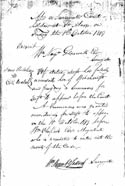 two witnesses—one male and one female—to substantiate her complaint, but the female witness, Ellen Piddle, was somewhat vague in her testimony. Magistrate Phipard, finding the case "labouring under such inconsistencys" as to be impossible to adjudicate, dismissed the matter, with costs to be paid by the defendant.87 In this instance, the court was likely happy to divest itself of a matter that the magistrate saw as trifling, although the capacity for defamation within the plebeian community may have been quite real.88 In general, however, the court seemed as open to the legitimacy of women's testimony as men's testimony, and female witnesses were an integral part of the local justice system.
Female Petitioners
Court records, official correspondence, and newspapers reveal fifty-seven instances of individual petitioning by women on the southern Avalon during the study period. Petitioning required a degree of legal astuteness on the part of these women—not only in terms of drafting the petitions (although some may have been helped by outside parties) but also (and more importantly) in terms of having an awareness of their rights and an understanding of how to make formal institutions work to their advantage. As Table 6.7 indicates, women petitioned central authorities and local magistrates and administrators (most wore two hats)89 on a variety of concerns, the documents ranging from applications in estate and property matters to requests for relief and redress.
Women's petitioning has been examined in other historical contexts as a means by which women transcended the legal constraints on their participation in public life. Campbell takes this approach, for example, in her examination of women's petitioning of the New Brunswick legislature in the mid-nineteenth century, finding a high level of female involvement in two general categories: petitions seeking some personal or community advantage, and those seeking changes in the law (specifically, prohibition). Through this mechanism, she argues, women helped to shape the political culture of the day.90 All the women's petitions on the southern Avalon during the study period were comparable to Campbell's first category (seeking personal advantage or redress). There were no women's petitions requesting changes in the law during the study period, but then there was no local campaign equivalent to the temperance movement discussed by Campbell. In as much as southern Avalon women were aware of their rights and able to use petitioning to protect them, however, they were participating in the public and political domain.
Rosen has also examined women's petitioning, within the context of colonial New York. She presents the practice as a means by which women could seek redress from a legal system that otherwise excluded them to a large degree. In late seventeenth- and eighteenth-century New York, she observes, only a small proportion of women sought conflict resolution through the formal court system. Petitioning, by contrast, was an "alternative path to justice" for a group that found themselves marginalized from the rights-based legal system of the period. However, the petition was essentially a plea to the "discretionary justice" of governors and other authorities of the day, she argues. While it helped colonial women to transcend the legal constraints of the court system, it reinforced their deference and subservience and "only partially mitigated [their] lack of freedom."91
70However, Rosen may be reading too much into the deferential tone of women's petitions. In terms of language, they were using the conventions of the day—formulae followed by most petitioners, regardless of class or gender. Caution must be used in drawing connections between a protocol used as a means to an end and the internalization of social attitudes. Some of her other observations also do not apply tidily to the southern Avalon context. There, both men and women petitioned for discretionary justice, so the mechanism was not gender-specific. Furthermore, petitioning was not the only recourse for women to obtain justice on the southern Avalon. Indeed, it was often as much a part of or complement to the formal legal system as it was an alternative to formal justice. Most of the petitions examined here (thirty-eight petitions, or 67 percent) were either submitted to local magistrates as direct entrées into the court system (sixteen) or used to initiate probate or administration of estates (twenty-two). Another four (7 percent) fell amidst the flurry of petitions for land grants from both men and women in the late 1820s and early 1830s as imperial authorities gradually relaxed the impediments to holding title to (as opposed to merely occupying) property (see Appendix A).
Only fifteen petitions (or 26 percent) were directed to local magistrates or central authorities (the governor or chief justice) in pleas for discretionary justice comparable to those described by Rosen. Yet even these do not all fall neatly into such a categorization: four either arose from or were segued into cases in the local courts; and another eight sought resolution of disputes that quite likely would have gone to court had the matters not been resolved, given women's general willingness to initiate such actions. Magistrate Robert Carter noted in his diary in April of 1840, for example, that he went to Fermeuse "to view some Land petitioned for yesterday by Mary Oneile—part claimed by Wm Brothers towards Admirals' Cove." The grant was awarded to Mary later that year, despite Brothers' adverse claim, but she likely would have pursued the matter in court if necessary, for she had already petitioned the court previously on matters related to her late husband's estate.92 That same year, Carter noted that he had written James Jackman and "ordered him to desist from interfering with Land petitioned for by Margaret Dunphy at Renews."93 Again, while Margaret sought the magistrate's intervention, she likely would not have hesitated to initiate a suit against Jackman if necessary, for six years later, she sued her employer, Nicholas Power, for outstanding wages.94 It is far more probable, then, that women were petitioning authorities to mediate disputes as a preliminary step in conflict resolution, rather than as their sole recourse to justice. Indeed, as has been seen, far from being excluded from formal legal processes, women were a visible presence in the courtrooms of the southern Avalon. Furthermore, unlike colonial New York, where the legal system became more exclusionary of women as it became more formalized, along the southern Avalon, as the court system evolved in the late eighteenth and early nineteenth centuries, formal justice appeared to become even more accessible to women, for women's participation in court matters increased in both absolute and proportionate terms.
If anything, as the formal court system developed, women's petitioning on the southern Avalon dwindled away, except in probate and administration matters, which surged in the 1820s, 30s, and 40s. The floodgates for the latter had been opened by the 1824 Judicature Act (5 Geo. IV, Cap. 67), which gave the chief justice the power to grant administration of intestacies in addition to his existing power to grant probate.95 These estate petitions themselves demonstrate that women were able to embrace changes in the legal system and use them to their advantage. But petitioning on other matters appears to have been a disproportionately eighteenth-century activity, with only ten individual petitions appearing after the turn of the century on issues other than estate matters (four of which were standard petitions for land grants, not pleas for discretionary justice). By contrast, women's appearances in the courtrooms of the district rose after the passage of the first Judicature Acts of 1791 and 1792 (see note 4, above), so they were increasingly using the mechanisms of criminal charges and civil litigation rather than petitioning to seek resolution of conflicts.
It is tempting to interpret the decline in women's petitioning on matters other than probate/administration matters in terms of class—a transition in traditions, as the Irish plebeian community, with less formal literacy, swelled towards the turn of the century. It is clear that women from the English Protestant gentry had been active eighteenth-century petitioners, especially in property disputes and estate matters, but their participation dropped off sharply in the 1800s as they were increasingly represented in such matters by men in their circle (see Chapter 9). However, this does not explain the decrease in overall petitioning, as Irish women also proved to be adept petitioners in all categories, authoring eighteen out of twenty-two petitions for probate/administration, eleven out of nineteen petitions on property matters, seven out of eight petitions for redress for assault, and two out of three relating to employment disputes. Again, the likely explanation of the decline in petitioning on non-estate matters is the greater degree of access to the court system and its apparatus for conflict resolution, and a greater willingness on the part of Irish plebeian women to access this more public route.
Of course, the woman who was most constrained by the formal legal system was the married woman, the feme coverte, with no formal legal identity separate from her husband's. For the married woman, then, the petition could indeed be an important alternative for redress of grievance or resolution of conflict. Although the marital status of southern Avalon female petitioners was not always indicated, available information indicates that at least fourteen (25 percent) of the women involved in the petitions examined were married—a fairly substantial level of participation—while another nineteen (33 percent) were widowed.96 Still, it must be noted that married women's petitioning did not always signal a lack of access to the legal system. Some of the petitions did emanate from or evolve into court matters involving married women (especially from the plebeian community), either directly or as star witnesses in court matters headed by their husbands' names. Indeed, authorities sometimes waived the principle of coverture completely, and permitted married women to represent not just themselves but also their husbands and/or their families. This was the case in at least five of the petitions examined, and all five petitions came from women of the Irish Newfoundland plebeian community.
75We have already encountered Elenor Evoy, whose 1795 petition to the court emanated from a desire to defend her family business and reputation (see Chapter 5), as well as Mary Bryan's successful effort to borrow time on the lease held by her husband who had become mentally incapacitated (see above). The other three petitions in this category issued from one of the most interesting petitioners from the Irish Newfoundland ethnic group, and the most prolific petition writer over all: Hannah McDaniel, alias Carney, of Ferryland. Hannah and her husband, William, took on some big guns in the area—the Westons and Carters, merchant-planters and magistrates—in a matter that dragged on for years in the late eighteenth century. The family was being sued first by Peter Weston, and then by his widow and executor, Catharine Weston, in relation to a debt in the amount of £109.4.5 that had originally been owed to the Westons by Hannah's father.
Hannah initially appealed to Governor Campbell for intervention in 1784. In a petition that she most likely wrote herself, 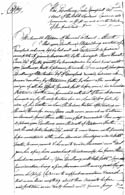 she explained that, because of the debt, Peter Weston had tried to attach a piece of property belonging to her mother, and that the property was eventually attached, or "hemmed in," by Weston's son-in-law, William Carter. Hannah argued that, while her mother had dealt with the Weston house for over seven years, she had never received a satisfactory accounting of "them old Arrears." Hannah's mother, Mary Shea, had previously petitioned Governor Montagu on the matter and received from the Admiral "a few Lines under Hand to Indemnify her," which had, unfortunately, been "mislaid." The property had since passed into Hannah's possession at her mother's death. In a deliberate play to Governor Campbell's chivalry, Hannah ended her petition with the following plea: "Your Excellency will take petitnrs Case into Consideration being apoor woman with avery great Charge seven helpless Children to support maintain & nourish ~ that never knew anything about these Accounts before." Campbell was sympathetic and ordered that "Hannah McDonnell and her husband" (an interesting reversal in gender protocol) retain peaceful possession of the property "so long as they shall Continue to employ it for the use of the Fishery."97
By March of 1787, however, the McDaniels were brought before the local magistrates by Catherine Weston, as executor of her late husband's estate. The summons was issued on 8 March to both Hannah and William, and ordered them both to appear in court the following morning. But Hannah initially appeared alone and advised that William had "gone in the woods"; her tardy co-defendant joined her in court that afternoon. At this juncture, the Weston camp was attempting to attach the rent for the property, which had since been let by William McDaniel to two local fishermen, Matthew Ronane (also Ronan) and John Grace, for £22 per year. However, the McDaniels had now crafted the following argument: that they were not truly married, that Hannah's last name was actually Carney (also Kearney), and that they were merely cohabiting (even though they had produced seven children over the years). Therefore, William, who was not legally Hannah's husband, had no claim to the fishing premises she had inherited from her mother, and had no right to lease them; the rents should therefore not be attached to pay the debt. This was a tidy argument, demonstrating an awareness of the laws of coverture. The local magistrates, however, treated the relationship as an informal marriage within the context of the flexible local marriage regime (see Chapter 8) and decided that William and Hannah were merely trying to "stave off from paying the said Debt." They ordered that the rents for the property be paid to Catherine Weston until the debt had been paid in full. The couple refused to comply, so a court order was issued to the lessees of the property advising them to withhold the rent from the McDaniels until further notice.98
The matter was then referred to Governor Elliot, although whether by the magistrates or by Hannah through another petition is not directly stated in the records. Yet the logical source of an appeal would have been the McDaniel family, now deprived of its rent. Furthermore, the governor's directions that his ensuing order "be entered in the Records of the District and the Paper… to be delivered to the Petitioner" suggest that Hannah had again plied her pen to represent her family's interests. If so, she was rewarded for her efforts, as Elliot concurred with Campbell's earlier decision that the Weston claim was not valid, although more from pragmatism than point of law, reasoning that "it would be the means of creating endless confusion throughout the Island if the Governor for the time being was to enter into the merits upon which his Predecessors had founded all their decisions." He directed the local magistrates to ensure that Hannah and William enjoyed quiet possession of the property.99
The Weston v. McDaniel matter resurfaced in 1790. On 17 August, Catherine Weston had another writ issued in relation to the debt of £109.4.5. This time, the action was taken against William McDaniel only, with the implication that the principle of coverture applied to the debt and the property inherited by Hannah. (Again, no evidence appeared in the records to disprove the McDaniels' claim that they were merely cohabiting, but the magistrates were apparently still disposed to treat the relationship as an informal marriage.) The sheriff served the writ on William and demanded payment or security for the debt. William refused, and the sheriff attached the property, described as "affishing Room, Dwelling houses, Stage and Flake."
80Neither of the parties named in the action appeared at the 15 September hearing of the matter: Catherine was represented by local merchant and magistrate Henry Sweetland, and William was represented, once again, by his wife Hannah. Hannah produced the previous decisions of Governors Campbell and Elliot as evidence; nonetheless, the court found in favor of Catherine Weston and ordered that William pay the debt and court costs. The final reporting of the matter in the court records is a cryptic note dated 15 October 1790, stating that the proceedings had been rescinded by consent of the parties and that the writs of attachment and execution had been destroyed.100 We are left to speculate by what means the parties came to a settlement, although one cannot help but think that Hannah's persistence had worn the Weston camp down. Ultimately, the much-disputed property was sold to William Carter by both William and Hannah in 1795 for £30.101
But the court had not heard the last of Hannah McDaniel, alias Carney. In 1791, she wrote a petition to the chief justice of the Island, John Reeves, in relation to a bond her husband had given six years previously to one Mr. Baker of Ferryland (most likely, John Baker, agent for Holdsworth's) as security for a debt of £100 Stg. William had agreed to pay £20 per year towards the debt, she said, but Baker was taking more than this amount each year from the rent of a fishing room that Hannah had leased to try to maintain her family. Furthermore, he was unfairly charging compound interest and was also trying to pressure Hannah to sell the premises to discharge the debt. As in her 1784 petition, Hannah appealed to the chivalry of the chief justice as she asked for relief for herself and her "poor helpless charge of six Children." Again, the petition was obviously written in her own words:
The Humbel Petition of Hanna McDaniel otherwise Carney most humbly sheweth-
That petitioner begs leave to inform your honor that one Mr. Baker in Ferryland has a bond of Petitioners husbd of One Hundred pounds Sterling these six years in his hands, & was to pay but Twenty pounds a year in part payment of said sum by Agreement, and in stead of that sum there was Twenty seven pounds ten shillings payd aforesaid Baker these two years past that is seven pounds ten shillings more then she Contracted. Compound was because the aforesd Mr. Baker wanted to distress petitioner & her poor helpless charge of six Children. Petitioner set [let] a fishing Roome to maintain herself & familey—The aforesaid Baker took all this rent to himself tho his Compound agreement was to Receive but Twenty pounds a year and not allow Petitioner a hundred [weight of] Bread out of his store towards mantaining her heavey charge—The aforesaid Baker several Different times wanted petitioner to sell her Room to pay himself & likewise wanted her to sign him a Bond for the Intrest of the aforesaid sum after paying more than Compound agreed upon yearly the tinnant that ouccupies petitioners room pays the aforesaid Baker the rent of said Roome without the Petitioners order or Consent—Your Petitioner cannot get no Good of ye said Mr. Baker There fore Petitioner hopes your honor will Take it into consideration & vindicate the Cause then your Petitioner in Duty bound [obliterated] will be for Ever bound to pray∼
Chief Justice Reeves agreed with Hannah that Baker had no right to stop the full amount of the rent and that the wording of the bond gave him no right to charge interest, nor to dispose of the skiffs that had apparently been put in his possession as security only. He ordered that Baker apply the £20 per year taken from the rent directly against the principal and that he provide a complete accounting to the McDaniels upon full payment of the bond in order "to prevent the Court being troubled unnecessarily with McDaniel's Complaints."102
However, the court would be troubled by Hannah's worries one last time. In 1797, Michael Malone of Ferryland brought Hannah and her son John to court because John had reneged on his apprenticeship agreement with Malone "by the Counsel of his mother." According to Malone, John had "absented himself from his service and refused to serve out his time according to agreement." The hearing of the matter revealed, however, that John had been shipped specifically to fish out of the harbor of Ferryland for Malone for a season's wages of £15; but Malone had hired his boat to Martin Molloy and Thomas Clements of Renews, and he felt that he had the right to transfer the service of John McDaniel along with the boat. Hannah disagreed, and so did the court, finding that Malone "could not dispose of his servant, as he had done with his private property, without the servants consent." Given that John had shipped himself specifically to fish out of Ferryland, he could not be compelled to serve in any other harbor. Molloy and Clements ultimately agreed to fish out of Ferryland; John McDaniel thereupon agreed to serve them, and the matter was resolved to the McDaniels' satisfaction, with court costs of 16s. to be paid by the plaintiff.103 Case File 29
By the time of the 1800 nominal census, Hannah was no longer in the district. Her family was still there, however, which suggests that she had probably died (there are no parish records available for the 1790s to confirm this). And thus the court was deprived of one of its most adept petitioners and litigators, for it is evident that the McDaniels, and Hannah in particular, were extremely adept at maneuvering within the legal system; these were not just poor simple fisher-folk being out-gunned by members of the community's elite. It is also worth noting that it was Hannah, not her husband, who wrote the petitions, framing them in her own words (with detailed explanations and her own idiosyncratic expressions interspersed among the stock petitioner's phrasings). So Hannah was likely literate and certainly able to muster arguments to her cause. She appeared to have a basic appreciation of legal principles. She also effectively played the role of a poor distressed woman with hungry children to her advantage, especially to officials in St. John's who had no familiarity with her circumstances.
85Throughout the McDaniels' legal battles, it was Hannah, more than William, who represented the family's interests. What is more, she herself even directly represented William in the courthouse on occasion—a relaxation of the principle of coverture, given that the magistrates were eager to treat their relationship as a marriage. Even in the final sale of the long-disputed property to the Carters, Hannah joined with William as a signatory to the deed as one of the executors of her mother's estate. Her experience contrasts with that of Catherine Weston, who was represented in the proceedings by Henry Sweetland, likely because it would not have been deemed proper or respectable for a woman from a powerful merchant-planter family to appear in the courthouse. But it was Hannah, the woman from the plebeian community, who was more empowered by her ability to represent herself in the public sphere and by the community's acceptance of her presence there.
One other form of women's petitioning was evident during the period, in the form of community petitions for relief from distress. Petitions for relief poured into the local colonial secretary's office from the English Shore from the late 1810s into the 1830s as poor crop-growing conditions coincided with low fish catches and depressed fish markets to create acute hardship in many areas around the island.104 While numerous petitions arrived from the south coast and the northern districts year after year, however, there were very few such petitions from the southern Avalon. One came from the district of Bay Bulls in May of 1822, and a presentment from the grand jury of Ferryland sought relief for the district in 1826.105 But nothing further was entered into the records by the colonial secretary until the winter and spring of 1832-33, suggesting that the fishery or potato crop in the area may not have suffered as badly and/or that local relief measures (for example, charitable subscriptions, funds from liquor licenses) in this less heavily populated area were a sufficient stopgap for such hardship as did exist. But by the winter of 1832-33, after three consecutive poor growing seasons, requests for relief from the southern Avalon joined those from the northern districts and the south coast, as fishing families found themselves without seed potatoes to plant and local merchants and administrators declared their inability to extend any further relief from personal or communal resources. Still, the level of distress on the southern Avalon must not have been as pervasive as in other areas at the time: no petitions for community relief appeared from Trepassey–St. Mary's district; only two arrived from Ferryland district (Renews and Fermeuse), and two from Bay Bulls district (Bay Bulls and Witless Bay).106
Requests for assistance from around the island generally came in the form of appeals from missionaries, magistrates, and/or ad hoc relief committees, often accompanied by petitions from distressed residents themselves. Generally, these petitions were signed by household heads—primarily men and widows—with families to support. Such was the case with the petition forwarded from Fermeuse in April 1833, under a covering letter from local merchant Thomas Congdon. Congdon indicated that the petitioners would require 200 barrels of seed potatoes, as they had none for planting that season. The petition itself, written in a hand different from Congdon's (and possibly by one of the petitioners), showed a familiarity with the ornate conventions of petition-writing of the period:
Humbly Sheweth that your petitioners in consequence of the great failure of their potato crop last season, together with the quantity which have rotted in their Cellars in Consequence of the early set[t]ing in [of] the past severe Winter before the potatoes were properly secured, or from the Want of maturity in the growth of the crop put in—are totally destitute of seed or the means of providing any for the coming season.
That your petitioners are all people with large families depending on them for support, consequently look forward with Fearful anxiety to the approach of another [bad growing season] Which must bring inevitable starvation on a large portion of them, unless it may by the aid of your Excellency, under the blessing of Divine Providence be averted.
In tender consideration of our great necessities and the fearful consequences that may result from them We humbly pray that your Excellency may be graciously pleased to grant us such relief as in your Excellencys Wisdom and Humanity may seem meet and your petitioners as in duty bound will forever pray ~
The petition was signed by twenty-three family heads, including two women: Mary Fahey and Catherine Tobin.107 This was fairly representative of the petitions received from all districts.
Less typical was the petition received from Witless Bay in May that same year. In this instance, eight widows and two men (one described as a "cripple" and the other as "old and infirm") were the only signatories (all by their mark). The language was much plainer and appealed to the governor's chivalric instincts in relation to widows and their children:
We your Excellency's humble petitioners, poor Widows with large families, being deprived of all possible means of procuring Seed Potatoes, do most respectfully lay our distress before your Excellency, hoping you will take it into your gracious consideration, and send us that relief which your Excellency may think proper to bestow.
And your petitioners as are duty bound will ever pray∼
No reference was made in the text to the men who had to be supplied due to incapacity; their situation was obviously conflated with that of the "poor Widows with large families" by the petition's author. The family size and specific needs of each petitioner were entered, with the total need assessed at thirty-one barrels of seed potatoes. A marginal note by the colonial secretary, however, indicates that only twelve barrels were actually sent.108 Perhaps the governor was suspicious of the high level of widowhood in such a small community (although a couple of fishing disasters could have accounted for this).109
90In general, however, there seemed to be an official reluctance to send seed potatoes to the southern districts, including the southern Avalon and Placentia Bay. Relief committees in all districts of the island were instructed to assess need carefully and to keep precise records of all seed potatoes and other relief (such as bread and molasses) distributed. The instructions to the southern districts, however, always included firm admonitions that the seed potatoes were to be considered a loan only, to be repaid in kind at the fall harvest. When additional relief was provided in the form of bread and molasses, the colonial secretary took pains to explain that the governor had limited the quantities supplied "as only to be sufficient to support life∼ & not to create a desire to depend on the bounty of Govt. in future."110 Such cautionary language is not as evident in the correspondence with the northern districts, and the reproving tone seems somewhat unwarranted, given the limited number of requests from the southern Avalon compared to the overwhelming dependence of the northern districts on relief distribution for many years. Perhaps authorities questioned the validity of the claims from the south, given that some areas in the southern districts were coping without assistance. However, there is also a possibility that there was some residual mistrust of predominantly Irish Catholic districts among Anglo-Protestant governors and civil servants of the day.
At any rate, this was a very different form of petitioning from the individual women's petitioning examined above, emanating from an extended period of poor growing and fishing seasons—a combination of natural circumstances that brought high levels of distress to numerous Newfoundland communities and ignored gender in its impact. Male and female household heads joined in what were, indeed, deferential requests to a central authority for relief from impending starvation. These were extraordinary efforts in exceptional times, not comparable to the individual petitioning described earlier, in which women were acting in a quest for individual justice, whether through the formal legal system or as an effective alternative to it.
^topConclusion
Southern Avalon women found various ways to gain access to the legal system between the mid-eighteenth and mid-nineteenth centuries, even if their way was sometimes impeded by the law's assumption of women's secondary status. Their participation was not as extensive as men's, but they were present in the system in substantial numbers and in a variety of capacities: as civil litigants, complainants and defendants in criminal matters, witnesses, and petitioners. Indeed, women's involvement with the legal system—especially that of plebeian women—increased as the courts became more formalized in the late eighteenth century and the early decades of the nineteenth century.
For the most part, local magistrates placed men and women who appeared before them on a fairly equal footing. Yet not all women had ready access to the courtroom. The greatest bar to women's participation was the common-law principle of coverture, although it should be noted that the status and authority of married women in plebeian families likely permitted them a good deal of behind-the-scenes involvement in any legal matters confronting their families. Still, the local courts generally recognized coverture, although they also made a significant number of exceptions.111
Husbands were usually recognized as the legal agents of their wives in civil matters involving debt, for example. Nonetheless, the court occasionally permitted married women to initiate actions: Jane Austen and Margret Kenney, for example, sued various debtors in their own right, even though their husbands were alive; and the high percentage (75 percent) of female creditors and debtors who appeared on their own behalf in court suggests that the principle was waived on other occasions as well. It is worth noting here that most local magistrates were also members of mercantile families who—if Goodridge's and Sweetman's were representative—permitted married women to hold accounts in their own names if they carried out economic activities independently of their husbands. The principle of marital unity, then, was often tempered by local circumstances in a number of spheres, as a certain laxness towards coverture permeated various realms at the level of daily practice.
95Magistrates also generally held that husbands were entitled to the property of their wives after marriage, although again they made exceptions. For example, the local court excepted any property of the wife over which the husband had not exercised any control or act of possession, as occurred when the firm of Hunt, Stabb, Preston tried to attach property belonging to Elizabeth Beaves to pay her late husband's debts. And there were other occasions on which the principle of coverture was not applied. Mary Bryan, a married woman from St. Mary's, represented her family's interests in 1780 in relation to a property matter, although there was cause for relaxation of the principle in that matter, as her husband had been deemed "insane." A more clear-cut example was that of Hannah McDaniel, who represented herself and her husband in a protracted property and debt dispute in the 1780s and 1790s.
There were other cases in which wives represented their husbands in the courthouse. As noted above, Margaret Meaney appeared for her husband and successfully defended him against assault charges in 1833. And when John Fowler initiated an action against Richard Shallow for recovery of a property at Renews, it was Shallow's wife who appeared in court and defended the family's claim to the land. At the initial hearing, she stated "that she was taken by surprise in the matter" and asked the court to "grant her time [and] she would produce several material Witnesses to prove her occupancy of the property in possession for a period of over thirty years." The court gave her only until the next morning, but she managed to find two witnesses to establish her claim, and a judgment was initially given in her favor, although a new trial was later ordered on the grounds that the judgment was "contrary to law and Evidence."112 So married women were no strangers to the courtroom.113
Furthermore, while English common law held the father to be legal guardian of the children of a marriage, local courts sometimes tempered this principle in terms of parental spheres of influence. In 1800, for example, Trepassey doctor Michael Dutton complained to the magistrate that he had frequently seen the children of the Welch family taking boards from a fish stage in the harbor. Although the "Welch family" were the named defendants, and the culprits were specifically identified as "the Children of John Welch," it was Mrs. Welch who appeared in court and received the surrogate's warning that her children were to cause no complaint in the future. In this case, it seems that the court went directly to the mother as the parent most likely to be able to enforce the court's judgment.114 Furthermore, in matrimonial matters, the courts did not always uphold the rights of fathers as legal guardians of children. In Chapter 8, for example, several cases involving child custody will be discussed in which wives—even those who had technically "deserted" the marriage—were given custody of the children of the marriage.
In some of the cases in which mothers represented their children's interests, the women had assumed the status of legal guardian in widowhood, as the law permitted. Catherine Delahunty of Ferryland, for example, was a widow when she sued James H. Carter for the seduction of her daughter Ellen in 1827,115 and Thomas Norris for her son's outstanding wages three years later.116 Although the records are not clear, Jane Fitzpatrick, who tried to have her son's apprenticeship agreement with Robert Pitt voided in 1837, was also likely widowed or separated from her husband, for parish records indicate that her husband had either died or left between the birth of her daughter in 1826 and the birth of another son in 1828.117 Elizabeth Madden was likely also single, separated, or widowed when she intervened in her son's working arrangements with local employer Michael Curragan in 1836.118 However, such was not the case when Hannah McDaniel appeared as co-defendant with her son John for having advised John to renege on his shipping agreement with Michael Malone in 1797. John's father, William McDaniel, was very much alive, for he was listed with the family in the 1800 nominal census. In this case, the complainant and the court chose to prosecute the parent who had provoked the alleged breach of contract, regardless of legal guardianship.119
Did women themselves seek differential treatment from the legal system? Occasionally, women appealed to the chivalric impulses of governors or magistrates in framing their requests or defenses. This was particularly true in women's petitioning, in which a variation of the phrase "poor distressed woman with a large family, [x number of] children to feed" appeared with some regularity. Whether this form of suasion was an accurate reflection of the woman's circumstances (as was likely when the women of Witless Bay were seeking seed potatoes in 1833), or a ploy to win the sympathy of authorities (as was likely in Hannah McDaniel's petitioning) probably varied from case to case.120 Sarah Turpin's petition in 1780 from Bay Bulls, requesting the intervention of the governor in relation to the "Rude Behaviour of Fishermen at Bay of Bulls to women who pass along while their Jigging of Squids," was also likely intended to touch on gentry sensibilities and notions of propriety and respectability.121
100In most civil and criminal matters, however, there was no evidence in the court records that female plaintiffs sought preferential treatment because of their sex, nor were there impassioned pleas from female defendants for mercy for the "gentler sex." For the most part, women took their chances, and their lumps, in the same manner as male participants in the system, and the court dealt with them on this basis. There was an exception, however, in the area of more severe punishment. Here, authorities did tend to treat women differently: there were no cases in which women were sentenced to whippings, and imprisonment and transportation were not applied to women with the same frequency as they were to men, although they were certainly employed against women who were perceived as extreme threats to the moral and social order.
What is most striking about the matters examined above is the degree of agency exhibited by women on the southern Avalon in their encounters with the formal justice system. This experience appears to diverge from that of women in many other British colonial jurisdictions. Rosen, for example, in her examination of the legal system in colonial New York, states: "Clearly the courtroom… was considered primarily a male, not a female, place."122 Yet this image of exclusion does not come into such sharp focus on the southern Avalon. A closer comparison can be seen in the women of colonial Virginia, as described by Richter, who "knew how to use the county court system to protect their freedom, interests, and families."123 Yet even Richter interprets women's presence in the system primarily in terms of the extension of their roles as wives and mothers—the "public use of household authority." They were not stepping outside the gender roles that had been assigned them by colonial Virginia society, she says, and thus were not perceived as a threat to the social order.124
Yet, as argued in the previous chapter, understandings of gender on the southern Avalon, particularly within the plebeian community, were still very much under negotiation in the period of early settlement. It is not likely that these women, or the communities in which they lived, saw their lives solely in terms of marriage and motherhood. Indeed, describing women's public actions only in terms of the extension of their roles as wives and mothers is surely a gender pitfall. Similar actions by men (be they court matters, petitioning, food riots, or other articulations of plebeian justice) are never seen purely in terms of the extension of their roles as husbands and fathers.125 It is gendered reporting that pre-supposes that the public woman is an aberration—that some rationale for her public presence must be found rooted in the domestic sphere, that the reasons for her public acts are always different from those which motivate men, and that these reasons must always be selfless.
The evidence from the southern Avalon suggests that plebeian women often acted from self-interest and in pursuit of their individual rights, just as they also frequently acted (as did men) in the interests of their families—families for which they felt they had equal responsibilities. Moreover, the formal legal system, at least at the local level, was not hostile to their presence on these terms and exhibited a fair degree of flexibility in accommodating not just single and widowed women, but also those married women who presented themselves when the letter of the law refused to acknowledge them. This reception, too, seems to have been at variance with the experiences of women in many other British jurisdictions of the day.
^topNotes:
Note 1: See, for example: Constance Backhouse, Petticoats and Prejudice: Women and Law in Nineteenth-Century Canada (Toronto: Osgoode Society, 1991); Carol Berkin and Leslie Horowitz, eds., Women's Voices, Women's Lives: Documents in Early American History (Boston: Northeastern University Press, 1998); Linda Cullum and Maeve Baird, "'A Woman's Lot': Women and Law in Newfoundland from Early Settlement to the Twentieth Century," in Pursuing Equality: Historical Perspectives on Women in Newfoundland and Labrador, ed. Linda Kealey, Social and Economic Papers, no. 20 (St. John's: ISER, 1993), 66-162; Karen Dubinsky, "'Maidenly Girls or Designing Women?': The Crime of Seduction in Turn-of-the Century Ontario," in Gender Conflicts: New Essays in Women's History, ed. Franca Iacovetta and Mariana Valverde (Toronto: University of Toronto Press, 1992), 27-66; Susan M. Edwards, Female Sexuality and the Law: A Study of Constructs of Female Sexuality as They Inform Statute and Legal Procedure, ed. C. M. Campbell and Paul Wiles (Oxford: Martin Robertson, 1981); Judith Fingard, The Dark Side of Life in Victorian Halifax (Porter's Lake, NS: Pottersfield Press, 1989); Deborah A. Rosen, "Mitigating Inequality: Women and Justice in Colonial New York," in Women and Freedom in Early America, ed. Larry D. Eldridge (New York: New York University Press, 1997), 313-29; and Laurel Thatcher Ulrich, Good Wives: Image and Reality in the Lives of Women in Northern New England, 1650-1750 (New York: Knopf, 1982). back
Note 2: Rosen uses the term "discretionary justice" to describe a diluted form of justice dispensed by authorities on an ad hoc basis to women who were essentially excluded from the formal, rights-based legal system in colonial New York. See Rosen, "Mitigating Inequality." back
Note 3: Writers such as Mary Anne Poutanen, Donald Fyson, and Karen Dubinsky have recently argued that women were far from being passive victims in their contacts with the formal legal system. However, their work still focuses on prostitutes and female victims of violence and sexual aggression. Even Fyson's more broadly ranging study finds that women most often appeared in court on assault matters, rarely appeared in matters involving service contracts or property, and were much more likely to be complainants than defendants overall. See: Poutanen, "Reflections of Montreal Prostitution in the Records of the Lower Courts, 1810-1842," in Class, Gender, and the Law in Eighteenth- and Nineteenth-Century Quebec: Sources and Perspectives, ed. Donald Fyson, Colin Coates, and Kathryn Harvey (Montreal: Montreal History Group, 1993), 99-125; Dubinsky, Improper Advances: Rape and Heterosexual Conflict in Ontario, 1880-1929 (Chicago: Chicago University Press, 1993); and Fyson, "Criminal Justice, Civil Society, and the Local State: The Justices of the Peace in the District of Montreal, 1764-1830" (Ph.D. diss., Université de Montréal, 1995). Carol Berkin and Leslie Horowitz, by contrast, discuss a much wider-ranging participation involvement of women in the legal realm of colonial America. See Berkin and Horowitz, eds., Women's Voices. back
Note 4: Throughout the seventeenth century, formal justice on the island had been a makeshift affair, dispensed by fishing admirals, the captains of the first fishing vessels to reach every harbor at the start of the fishing season. This system, with a right to appeal decisions to the visiting naval commodore, was given legislative sanction by the Newfoundland Act of 1699. In 1729, in grudging acknowledgment of the over-wintering population, the naval governor at Newfoundland was permitted to appoint justices of the peace and surrogates to hear fishery disputes in the absence of fishing admirals and seasonal governors. As the century progressed, the legal regime in Newfoundland was expanded to include customs officers (1739) and courts of vice-admiralty (1736), oyer and terminer (1750), and common pleas (1789). However, challenges were raised as to the jurisdiction of these new courts vis-à-vis the jurisdiction of the fishing admirals that had been established by statute the previous century. To resolve the issue, a court of civil jurisdiction was introduced in 1791, and its jurisdiction was broadened to include criminal matters the following year (see the Judicature Acts of 1791 and 1792, or 31 Geo. III, Cap. 29, and 32 Geo. III, Cap. 46, respectively). Renewed thereafter by annual legislation, the court, with expanded duties, was made permanent in 1809. (Web Link)
At the local level, justice was meted out most frequently by resident justices of the peace, who were empowered to take depositions, and hold petty and quarter sessions. (By 1792, defendants in criminal matters and civil matters involving amounts over £10 were entitled to jury trials.) These civil magistrates provided a year-round presence in the outports, hearing a wide variety of civil and criminal matters (often but not exclusively of a summary nature) and maintaining a customary legal regime, their decisions often tempered by local exigencies. Surrogate courts, in which naval officers (appointed as justices by the governor) were assisted by local magistrates, were convened once a year in the outports—usually in the autumn quarter session to coincide with the end of the fishing season. After 1791, local civilians (such as Robert Carter in Ferryland) also served as surrogates. As Christopher English points out (see below), the system was quite accessible to working people and provided "speedy… and inexpensive justice" outside the capital of St. John's.
The Judicature Act of 1824 (5 Geo. IV, Cap. 67) revamped the supreme court and provided for the incorporation of towns and the registration of title to real property. It also abolished the system of surrogate courts—a reflection of the demise of the migratory fishery and the establishment of a more permanent population. The island was divided into three districts, where circuit courts were held at least once a year to hear all matters of civil and criminal jurisdiction other than treason and felonies not within the benefit of clergy. Either a judge or assistant judge of the supreme court presided, assisted by local magistrates. Local justices of the peace continued to dispense summary justice in general and quarter sessions.
Recent scholarship provides two interpretations of this early development of law in Newfoundland. Christopher English argues that the justice system developed somewhat unevenly up to the early decades of the nineteenth century. Until the local population became more permanent after the Napoleonic Wars, state authority was rudimentary, and the legal system was limited by minimal local requirements. See: English, "The Development of the Newfoundland Legal System to 1815," Acadiensis 20, no. 1 (autumn 1990): 89-119; English and Christopher P. Curran, "A Cautious Beginning: The Court of Civil Jurisdiction, 1791," in Silk Robes and Sou'westers: The Supreme Court, 1791-1991 (St. John's: Jesperson Press, 1991); English, "The Reception of Law in Ferryland District, Newfoundland, 1786-1812" (paper presented to a joint session of the Canadian Law and Society Association and the Canadian Historical Association, Brock University, 2 June 1996); and English, "From Fishing Schooner to Colony: The Legal Development of Newfoundland, 1791-1832," in Law, Society, and the State: Essays in Modern Legal History, ed. Louis A Knafla and Susan W. S. Bunnie (Toronto: University of Toronto Press, 1995), 73-98.
Jerry Bannister challenges the notion that the island's legal system was piecemeal and primitive in the eighteenth century, arguing that, despite limited institutions established under statutory law, a very effective judicial regime developed, with civil magistrates and naval authorities acting in cooperation as they drew upon statute law, prerogative writ, common law, and the custom of the country. This did not reflect Newfoundland's delayed development compared to other North American colonies, he says, but simply the evolution of a different type of legal regime that was well suited to the particular historical context. See Bannister, The Rule of the Admirals: Law, Custom, and Naval Government in Newfoundland, 1699-1832 (Toronto: University of Toronto Press, with the Osgoode Society for Canadian Legal History, 2003). back
Note 5: Even after obtaining a local legislature, Newfoundland continued to adopt much of the legislation passed by the British parliament. Two notable areas of exception, however, were inheritance and divorce law, as Chapters 7 and 8 will discuss. back
Note 6: Krista Simon also describes the presence of women in civil and criminal matters in the court life of nearby Placentia in "A Case Study in the Reception of Law in Newfoundland: Assessing Women's Participation in the Courts of Placentia District, 1757-1823" (Honors diss., Memorial University of Newfoundland, 1999). back
Note 7: The local courtroom appeared to be very much communal space in the eighteenth and early nineteenth century, attended by people of both sexes and all ages. According to Lieutenant Chappell, who visited Ferryland around 1813, a day in court could sometimes assume almost a carnival atmosphere:
We arrived at Ferryland about ten o'clock in the forenoon, and were surprised to find all the people of the place in their best attire, as if it had been the day of the Sabbath. Men, women, and children, were flocking in a body towards a large edifice upon the side of a hill. Conjecturing this to be a place of worship, we ascended with the crowd, and entered the building pell-mell with them. Here we were astonished at seeing our worthy Captain [Donald Campbell] placed in a high-railed pew; by the side of a short squab man, in a green coat, with a pair of large spectacles upon his nose. On the Captain's left hand, ten or eleven decent-looking men were huddled together in a sort of pound, with scarcely sufficient room to turn themselves. A moment's observation convinced us, that we had entered the Surrogate Court of Justice; that the people in the pound were Jurors; and that the little man in green was the Magistrate of Ferryland [emphasis in original].
For the entire court proceedings that day, see Lieut. Edward Chappell, Voyage of the Rosamond to Newfoundland and the Southern Coast of Labrador (London: n.p., 1818), 224-28. back
Note 8: Occasional overlapping of cases occurs in the discussion that follows: for example, a case of a female landlord's collection of rent arrears will appear in the sub-sections on both debt and landlord-tenant matters. back
Note 9: Unless otherwise specified, all tables in this chapter have been assembled from the database described in Appendix B. In judging the significance of the number of cases discussed here, the reader should remember the incomplete state of the court records and the low population figures for the area, as noted in Appendix B. back
Note 10: See PANL: GN 5/2/C/3, 1835-47 journal: Jane Austen v. William Harvey, 6 November 1839; and Jane Austen v. William Sheehan, 22 October 1840. Also, GN 5/4/C/1, Ferryland, box 1: 79, Jane Austin v. Edmund Keef, 26 October 1835; 91, Jane Austin v. ------ McKay, 31 October 1836; and 91 and 93, Jane Austin v. W. Battcock, 31 October 1836 and 16 January 1837. Also, GN 5/4/C/1, Ferryland, box 2: Jane Austen v. Martin Conway, 11 November 1841; Jane Austen v. Cornelius Kelly, Jr., [November] 1844; and Jane Austen v. John Payne, 20 October 1845. back
Note 11: All these debt collection cases are cited from the St. John's court records in Mannion Name File, Ferryland, "Kenny, Margaret" (Mannion uses the modern spelling of her first name, but the form Margret appears consistently in the Ferryland court records). Margret Kenney (or Keney) also had the dubious honor of being the only repeat debtor among the group. Margret was a rather colorful local character. She first appeared in the Ferryland court records in 1792, when she was successfully sued by William Young for £1.4.0. In 1794, she was also charged and convicted of selling liquor without a license, although this lack was rectified the following year when she was granted a liquor license for Ferryland district by local magistrate Robert Carter. In June of 1795, Margret was sued by Margret Duggan for nonpayment for unspecified services performed (most likely work in Kenny's house or tavern). Margret Kenny advised the court that she had already provided free room and board to the other woman for three or four months, having taken her into her house "thro Compassion," as Duggan had found herself in "a distressed situation." The two women "haveing caluminated each other, and proceeded to scolding," the exasperated magistrate dismissed the matter without costs and declared their claims against each other settled; he also ordered that they "behave peaceable in future on pain of being prosecuted according to Law, if any further Complaints." Later that year, Margret and her husband as well as several male servants were charged and convicted of theft and receiving stolen goods; Margret was fined while her husband was not only fined but sentenced to imprisonment and a whipping, a sentence that he mitigated by joining the Newfoundland Regiment. Whether this episode affected her capacity to continue holding her liquor license, or indeed whether she was issued the 1795 license after her husband had left for the Newfoundland Regiment, is not clear from the records. By the turn of the century, Margret had likely joined her husband in St. John's, where his regiment would have been headquartered, for her various debt collection efforts emanated from the St. John's court, and neither of their names appeared in the Pole Papers, 1799-1800. See PRL, 340.9 N45: 18, William Young v. Margret Keney, 3 December 1792, and Rex v. Margret Keney, 14 July 1794. See PANL, GN 2/1/A, vol. 13, 225-26, Carter to Governor Waldegrave, 20 October 1797, enclosing various accounts, including a list of liquor licenses that had been issued for 1795. And see PANL, GN 5/4/C/1, Ferryland, box 1: Margret Duggan v. Margret Kenny, 4 June 1795; Arthur Hunt [agent for Leigh and Co.] and John Baker [agent for Holdsworth's] v. John Kenny, Margret Kenny, William Power, William Broadfoot, Timothy Fowler, Patrick Burne, and Richard Dunphy, Thursday, 6 [8?] October 1795. See also further discussion below. back
Note 12: PANL, GN 5/4/C/1, Ferryland, box 1: 25-26 and 50-52, Catherine Weston v. Hannah and William McDaniel, 8 and 9 March and 5 October 1787; 3 and 5, Catherine Weston v. John Kearney, 17 August and 15 September 1790; and 3-5 and 8, Catherine Weston v. William McDaniel, 17 August, 15 September, and 15 October 1790. back
Note 13: PANL, GN 5/4/C/1, Ferryland, box 1: Anne Sweetland v. John Whelan, 8 June 1798; and Ann Sweetland v. Patrick Harvey, 7 August 1798. back
Note 14: PANL, GN 2/1/A: vol. 1, 357, Governor Drake, Order to Thomas Cloney, Ferryland, re: debt to Ludwigg estate, 26 September 1752; vol. 3, 331, Governor Palliser, Order re: William Ludwick, for the estate of Mary Ludwick, v. James Keen, 28 September 1765; vol. 4, 12, Palliser, Order in William Ludwick, for the estate of Mary Ludwick, v. Richard Ball, 4 September 1766, re: debt to Ludwick estate; and Order re: adjustment of book debts in William Ludwick for the estate of Mary Ludwick v. Richard Benger, 4 September 1766. back
Note 15: PANL, GN 5/4/C/1, Ferryland, box 1: Mary Bryan v. Adam McLarthy, 14 November 1803; and Mary Bryan v. Thomas Norris, 14 November 1803. back
Note 16: PANL, GN 5/1/C/1, Ferryland, 59 and 61, John Dollard v. John Neile (also Neale), 16 and 30 October 1818. Similarly, in 1820, Patrick Pritchett sued William Summers for 18s. for washing services provided by Pritchett's wife. See PANL, GN 5/1/C/1, Ferryland, 119, Patrick Pritchett v. William Summers, 30 October 1820. back
Note 17: PANL, GN 5/1/C/1, Ferryland, 24-26, Samuel G. Carter and Co. v. William Coleman, 19 January 1818. back
Note 18: PANL, GN 5/1/C/1, Ferryland, 26, Samuel G. Carter v. John Power, 19 January 1818. Similarly, the court permitted Robert and James Carter to retain monies they had collected from Jeffery Jass to pay a debt of £8.16.0 that had been incurred by Jass's wife, the former Jane Dullanty, before their actual marriage. PANL, GN 5/1/C/1, Ferryland, 27, Jeffery Jass v. Robert and James Carter, 21 January 1818. back
Note 19: PANL, GN 5/1/C/1, Ferryland, 124-5 and 162, Hunt, Stabb, Preston and Co. v. the Estate of Thomas Beaves, 6 November and 11 December 1820. back
Note 20: PANL, GN 5/4/C/1, St. Mary's, 47-48, Frida Tobin v. Mary Bony, 28 September 1818. back
Note 21: PANL, GN 5/4/C/1, St. Mary's, 52, Catherine Lancrop v. John Doody, Jr., 29 September 1818. Two other cases straddled two of the categories. Jane Costeloe brought her servant Bridget Whealon to court in 1795, for example, for desertion, having "Eloped from her service," thus failing to honor a verbal employment contract. Bridget countered with a defense of maltreatment, arguing that she had been forced to leave to avoid the constant beatings and scoldings administered by her mistress. See PRL, 340.9 N45, Ferryland, Jane Costeloe v. Bridget Whealon, 3 August 1795. And when Anstice Dwyer of Brigus South sued Cornelius Kelly, agent for George and Thomas Kough, in 1797 (see Chapter 4), the issues of outstanding wages and shipping arrangements converged. back
Note 22: This assumption, however, must be qualified. It is clear, for example, that Frida Tobin (see above) had been hired for the fishing season; thus, she might have been an actual fishing servant, although it was also common to take on extra domestic help during the fishing season. Furthermore, it should be noted that many domestic servants were also expected to help with making fish at the height of the season. back
Note 23: PRL, 340.9 N45, Ferryland, Mary Whealon v. Margret Wallace, 21 July 1795. back
Note 24: PANL, 5/4/C/1, Ferryland, box 1, 71, Nancy Addis v. Mary Power, 1 September 1835. back
Note 25: As noted earlier, some of the suits for "unspecified" small amounts included in the section above on debt collections may actually have been wage claims (see Table 6.2). Thus, the actual total number of wage claims for the period may be under-represented in the current discussion. back
Note 26: PANL, GN 5/4/C/1, Ferryland, box 1, 28, Catharine Delahunty v. Thomas Norris, 15 November 1830. back
Note 27: PANL, GN 5/1/C/1, Ferryland, 62, Margret Neile v. John and James Munn, 2 November 1818. back
Note 28: Richter discusses a small number of indentured servants in colonial Virginia who sought protection from the court from masters who had violated the terms of their indentures. See Julie Richter, "The Free Women of Charles Parish, York County, Virginia, 1630-1740," in Women and Freedom, ed. Eldridge, 297-98. back
Note 29: Rosen observes some incidents of women's petitioning on behalf of daughters who were servants, but does not mention women's intervention in their sons' service contracts. See Rosen, "Mitigating Inequality," 322. back
Note 30: PANL, GN 5/4/C/1, Ferryland, box 1, Michael Malone v. Hannah and John McDaniel, 9 June 1797. back
Note 31: In 1836, Elizabeth Madden complained to the magistrates that Michael Curragan (or Corrigan) had refused to employ her son on the terms that had been agreed upon between the parties; the matter was settled out of court. See PANL, GN 5/4/C/1, Ferryland, box 1, 89, Elizabeth Madden v. Michael Curragan, 3 August 1836. In 1837, Jane Fitzpatrick requested that her son James be released from his apprenticeship agreement with Robert Pitt, because Pitt had not properly fulfilled his contract with her son; in this particular case, however, the magistrates deemed the matter to be beyond their jurisdiction. See PANL, GN 5/4/C/1, Ferryland, box 1, 93, Jane Fitzpatrick v. Robert Pitt, 9 January 1837. back
Note 32: See Dwyer v. Kelly, Tobin v. Bony, Lancrop v. Doody, and Costeloe v. Whealon, above. A further illustration comes from just outside the study area. When Jane Kelly of Placentia complained to Governor Campbell that her employer, John Cullin, with whom she had served for fourteen years at an agreed rate of £14 per annum, had turned her out without her wages, the governor instructed the local magistrates to enquire into the matter and "cause Cullin to fulfill the Engagement which it may be proved he made with the Woman, Or if it should be of so Extreme a nature as to require the Interference of the Governor, to provide for her till the Governor has an opportunity of deciding upon this matter" (italics added). See PANL, GN 2/1/A, vol. 10, 85-86, Campbell to Alexander Williams and John Brown, JPs, Placentia, 12 October 1784. back
Note 33: This section deals with female landlords as litigants only. The names of female landlords, however, also arose in the records in other matters in which they were not litigants, particularly estate matters. In a protracted dispute between John Nunan and the Carter family over the Richard Nason estate at Ferryland, for example, William Holly deposed in 1850 that his father, Michael, had rented property—a house, gardens, meadows, and fishing premises—from two landlords: the Nason estate and Mrs. Morry of Caplin Bay. See PANL, MG 247, Carter-Benger-Nason Papers, file 18, William Holly deposition, 13 August 1850. The property in dispute had, in fact, been inherited by Nunan from his aunt, Anstice Gorman, who had, in turn, inherited it from the late Richard Nason (see Chapter 7). Women landlords also appeared in merchant ledgers (see Appendix C, section 6). back
Note 34: While the family was represented in court by one of the sons (William), all Brazil's children were to share the proceeds of the rent equally. See PANL, GN 5/4/C/1, Ferryland, box 1, 25-26, William Brazil [for the estate of Morris Brazil] v. Robert Sparke and George Yard, 13 October 1792. back
Note 35: PANL, GN 5/4/C/1, Ferryland, box 1, 25-26, Mary Kennedy v. William Tucker, 13 October 1792. back
Note 36: PANL, GN 2/1/A, vol. 2, 121-22, Decree of Surrogate Edward Le Cras, 3 September 1754, confirming decision at a court of fishing admirals in Renews, 2 October 1752. The opposing claimant in the matter was Bazil Fielding of Mosquito Cove, Consumption (or Conception) Bay. back
Note 37: PANL, GN 2/1/A, vol. 4, 283-84, Order, Governor Byron, 29 October 1770. back
Note 38: PANL, GN 2/1/A, vol. 5, 133-37, Depositions before and Opinion of Jonathan Pitt, Admiral, and Nicholas Mudge, Rear Admiral, at Petty Harbour, 12 September 1772, as well as Order of Governor Shuldham, 18 September 1772. back
Note 39: PANL, GN 2/1/A, vol. 8, 97, Governor Richard Edwards to Robert Carter, JP, Ferryland, 22 October 1779. back
Note 40: It is likely that the property interests of a number of elite women were masked in the records by the names of male trustees. back
Note 41: As with female landlords, female tenants also surface in records on other matters in which they were not litigants. The will of Thomas Norris Sr., for example, left his son Thomas Jr. "a potato garden in Ferryland under lease to Catherine Dellahunty." See John Mannion Name File, Ferryland, "Norris, Thomas" (will probated 10-11 December 1840). The bondsmen for the administration of the estate of Robert Jordan in Brigus South offered as security a small piece of property being rented by the widow of Joseph Power (likely, Catherine Power) for 30s. per year. See Mannion Name File, Brigus South, "Jordan, Robert, Estate of" (administration 14 December 1829). In the lengthy dispute between John Nunan and the Carter family in relation to the estate of Richard Nason at Ferryland, several current and former women tenants on the disputed properties were mentioned in various depositions, including Margaret Aylward, who sublet her premises after moving to St. John's, and Kitty Bryan and her husband Timothy, who occupied a meadow for which the leasehold interest had originally been purchased by Kitty's mother, Ellen Sanders, from Michael Poor. See PANL, MG 247, Carter-Benger-Nason Papers, files 18, 22, 26, 28, and 29. Women tenants also appeared in merchant ledgers (see Appendix C, section 6). back
Note 42: PANL, GN 2/1/A, vol. 9 (reverse end), 26, Governor Edwards to Isaac Follet, JP, Trepassey, 10 October 1780. back
Note 43: PANL, GN 5/2/C/3, 1835-47 journal, William Carter v. Catherine Dullenty, 10 November 1837, 3 and 7 November 1838, 30 October and 8 November 1839, 31 October 1840, and 27 October and 1 November 1841. The same records appear in PANL, GN 5/2/C/8, 1835-42 journal. Various writs and summonses in relation to the matter appear in PANL, GN 5/2/C/4. back
Note 44: PANL: GN 5/2/C/3, 1835-47 journal, William Strachan, by his Guardian J. W. Saunders, v. Mary Gaulway, 28 October 1841; GN 5/2/C/8, 1835-42 journal, William Strachan, by his Guardian J. W. Saunders, v. Mary Gaulway, 28 October 1841; GN 5/2/C/4, William Strachan, by his Guardian J. W. Saunders, v. Mary Gaulway, Summons no. 21, issued 25 October for return 28 October 1841, and Writ no. 20, issued 2 November 1841, returnable "1st day of term." back
Note 45: PANL, GN 5/2/C/3, 1835-47 journal, Regina v. John William Saunders Esquire for assault and Battery of one Mary Gulloway, 6 October 1842. back
Note 46: See PANL, GN 2/1/A: vol. 10, 49-51, Petition of James Rows, Renews, to Governor Campbell, [14 August 1784], together with Affidavit of Robert Carter, JP, Ferryland, 14 August 1784; and vol. 19, 75, Governor Gower to William Carter, Surrogate at Ferryland, 1 October 1806. And see PRL, 340.9 N45, Ferryland, Catharine Clements v. James Rouse, 31 August 1785. In another case involving a woman's fishing property, Henry Brook successfully petitioned the governor on behalf of Betty Pottery of Sidmouth, Devon, to have William Simmonds cease building on a fishing room in Bay Bulls upon which she had already erected various fishing works. The governor ordered that Betty could continue to occupy the room provided she used it for the purposes of the fishery and could produce a fishing certificate for the men employed by her (as stipulated by the seventh and ninth articles of the Newfoundland Act of 1699). See PANL, GN 2/1/A, vol. 4, 109-10, Order, Governor Palliser, 1 September 1768. back
Note 47: PANL, PRL 340.9 N45, Ferryland, Edmond Dunfey v. James Connoly, 26 August 1784. back
Note 48: PRL, 340.9 N45, Trepassey–St. Mary's, Mary Stokes v. Martin Doyle, 20 April 1804. back
Note 49: PANL: GN 5/2/C/3, 80-81, Mary Brien v. William Carter, 10 November 1836; and GN 5/2/C/8, 1835-42 journal, 92, Mary Brine v. William Carter, 10 November 1836. back
Note 50: Two other cases involving women fell within this category. In 1817, Walter Vallis of Capeland (Caplin) Bay brought an action of trespass against Patrick Tobin for clearing and enclosing a piece of land that had allegedly been left to the Vallis family by John Bryan in compensation for board and nursing services from Vallis's wife. The matter was held over until further evidence was made available. See PANL, GN 5/1/C/6, Ferryland, 7, Walter Vallis v. Patrick Tobin, 17 October 1817. In St. Mary's, Mary McMahon sued John Quilty in 1833 for damages of £20 for trespass on her property, and she fenced off the disputed land while awaiting the decision of a court-appointed arbitrator on the matter. The arbitrator ultimately ordered that Mary accept the compensation that had already been offered by the defendant prior to the court case: a transfer of the ground upon which her house was built and an additional piece of land (measuring 57 yds. by 55 yds. by 35 yds. by 47 yds.) plus a right-of-way through Quilty's garden to a well. See PANL, GN 5/2/C/1, box 1, 317-18, Mary McMahon v. John Quilty, 8 October 1833. Case File 21 back
Note 51: Matters involving sexual assault and wife-beating will receive greater attention in Chapter 8. back
Note 52: This contrasts with Donald Fyson's finding that women in the district of Montreal in a comparative period were much more likely to be complainants than defendants (by a proportion of 3, no. 1) in criminal matters, with an overwhelming majority of their complaints relating to violence against their persons. See Fyson, "Criminal Justice," and "The Biases of Ancien Régime. Justice: The People and the Justices of the Peace in the District of Montreal, 1785-1839," in Power, Place and Identity: Studies of Social and Legal Regulation in Quebec, ed. Tamara Myers, Kate Boyer, Mary Anne Poutanen, and Steven Watt (Montreal: Montreal History Group, 1998). André Lachance discusses the low number of criminal charges laid against women in New France, attributing it to the conformity of women to domestic roles in the private sphere. See Lachance, "Women and Crime in Canada in the Early Eighteenth Century, 1712-1758," in Crime and Criminal Justice in Europe and Canada, ed. Louis A. Knafla (Waterloo: Wilfrid Laurier University Press, 1985). back
Note 53: These sentences were light compared with the harsher alternatives that courts had at their disposal. However, the financial hardship imposed by the fines was hardly insignificant, given wage levels and limited access to cash resources during the period, and thus their punitive effect was usually considerable. back
Note 54: See: David Taylor, Crime, Policing and Punishment in England, 1750-1914 (New York: St. Martin's Press, 1998), chap. 8; and Terry Carlson, "Dealing with Offenders: An Historical Perspective on Corrections in Newfoundland," in Ties That Bind: An Anthology of Social Work and Social Welfare, ed. Gale Burford (St. John's: Jesperson, 1997), 91-125. back
Note 55: In 1788, in the wake of the Ferryland riot, the merchants and principal inhabitants of Ferryland petitioned the governor for permission to apply the fines levied against the rioters towards the building of a jail and courthouse in the community, and the governor acceded to the request. See PANL, GN 2/1/A: vol. 11, 388-9, Petition from the Merchants and Principal Inhabitants of Ferryland to Governor Elliot, [October 1788]; and vol. 11, 394-95, Elliot to Memorialists in Ferryland district, 9 October 1788. But by the 1830s and early 1840s, lock-up facilities in the district were still inadequate, according to numerous presentments from grand juries on the southern Avalon. See PANL: GN 5/2/C/1, box 1, 227-28, Ferryland presentment, 29 October 1830; and 323, Ferryland presentment, 21 October 1833 (also in GN 5/2/C/1, box 2); GN 5/2/C/3, 11-14, Ferryland presentment, 3 November 1835 (also in GN 5/2/C/8); 77, Ferryland presentment re: need for jail at Renews, 9 November 1836; also St. Mary's presentment 27 October 1837; Ferryland presentment, 7 November 1838; Ferryland presentment, 6 November 1839; and Ferryland presentment, 27 October 1840. And see PANL, GN 2/2: vol. 1, 86-90, Ferryland presentments, May 1826; and vol. 2, 226-32, Judge Augustus W. Desbarres to Governor Cochrane, enclosing Ferryland presentments, 18 June 1827. back
Note 56: PANL, GN 5/1/C/1, Ferryland, 60, Margret Leary v. Edward Connolly, 27 October 1818. back
Note 57: PANL, GN 5/1/C/1, Ferryland, 81, Rex. v. Peter Winsor, 16 May 1819. back
Note 58: See PANL: GN 5/4/C/1, Ferryland, box 2, Regina v. William Mitchell, 2 and 9 August 1841; GN 5/2/C/3, 1835-47 journal, Regina v. William Mitchell, 28 October 1841; GN 5/2/C/8, 1835-42 journal, Regina v. William Mitchell, 28 October 1841; and MG 920, Robert Carter Diary, 31 July 1841. back
Note 59: PANL, GN 5/4/C/1, St. Mary's, 101, Ann St. Croix v. Elizabeth Feagan, 9 April 1821. back
Note 60: Although transportation is the term used in the records, the offenders were actually deported to their home countries. back
Note 61: PANL, GN 2/1/A, vol. 1, 224 and 227, Complaint of Robert Rose, Trepassey, and Governor Drake's decree, 12 August 1751; italics added. back
Note 62: PANL, GN5/4/C/1, Ferryland, box 1, Arthur Hunt [agent for Leigh and Co.] and John Baker [agent for Holdsworth's] v. John Kenny, Margret Kenny, William Power, William Broadfoot, Timothy Fowler, Patrick Burne, and Richard Dunphy, Thursday, 6 [8?] October 1795. back
Note 63: PANL, GN 5/4/C/1, Ferryland, box 1, 17-30 September 1788. back
Note 64: PRL, 340.9 N45, Ferryland, 13-14, Garret Dawson v. Thomas Quin et al., 14 October 1790. back
Note 65: In 1792, for example, Andrew Fling was convicted by local surrogate Robert Carter and local magistrates Peter Romney and Nicholas Brand of stealing a gallon of rum from the store of Messrs. Richard Tydel and Co. The rum's value was only 10d. Still, Fling was sentenced to twenty-four lashes on the bare back on the north side of the harbor, twenty-four on the south side, and twenty-four at the flag staff before the courthouse, then to be imprisoned until deported—a very harsh punishment for such a minor theft. See PRL, 340.9 N45, Ferryland, 17, Rex v. Andrew Fling, 3 December 1792. This same trio of justices ordered another whipping that same year for a personal affront to one of the magistrates. A local fisherman, John Dillon, was owed money from the estate of William Coman of Ferryland, but the money was stopped by magistrate Nicholas Brand. Dillon went to Brand "and abused him bid[d]ing him kiss his arse." Brand threatened to call for local constable Cox, but Dillon countered, "to the Divil I bob you and Cox too." He met Brand the next day and again insulted him, "telling him to the Divil I bob you." The local justices ordered that he receive thirty-nine lashes on the bare back at the flag staff before the courthouse, and then be imprisoned until deported to Ireland on a Vagrant's Warrant. See PRL, 340.9 N45, Ferryland, 16, Rex v. John Dillon, 14 November 1792. This was an unusually harsh sentence for such a minor assault; a similar affront to a member of the plebeian community would only have merited a small fine and a peace bond at most. Again, these justices from the local elite were likely trying to rein in the local Irish fishing population in the wake of the Ferryland riot. back
Note 66: PANL, GN 5/4/C/1, Ferryland, box 2: Regina v. Bridget Hegarthy, and Mary Reed, 16, 17, 18, and 21 February 1842; and Regina v. Charles Hegarthy, Bridget Hegarthy, and Mary Reed, 21 February 1842. back
Note 67: The sitting magistrates were Robert Carter, Peter Winser, John W. Saunders, and Matthew Morry. back
Note 68: PANL, GN 5/4/C/1, Ferryland, box 1, 48, Regina v. Bridget Murphy, 3 April 1833. There is no indication that Mary was charged in this matter for actually stealing the goods. She may have been a minor at the time, or it is possible that the charge against her was dropped in exchange for her evidence. back
Note 69: PANL, GN 5/4/C/1, Ferryland, box 2, Estate of William Carter v. Patrick Costelloe and Bridget Hegarthy, 25 November 1844. back
Note 70: PANL, GN 5/4/C/1, Ferryland, box 2, Regina v. Bridget Dullanty, 18 April 1844. back
Note 71: PANL, GN 5/1/C/1, Ferryland, 117, Rex v. Ann Prichet, 24 October 1820. back
Note 72: PANL: GN 5/2/C/3, 1835-47 journal, Regina v. Anastatia Goff and Mary Daley, 27 and 28 October 1837; and GN 5/2/C/8, 1835-42 journal, Regina v. Anastatia Goff and Mary Daley, 27 and 28 October 1837. back
Note 73: PANL: GN 5/2/C/3, 1835-47 journal, Regina v. William Lush, 27 and 28 October 1837; and GN 5/2/C/8, 1835-42 journal, Regina v. William Lush, 27 and 28 October 1837. back
Note 74: Mannion Name File, Bay Bulls, "Penny, Margaret." back
Note 75: PANL, GN 5/4/C/1, Ferryland, box 1, Rex v. Mary Power, 30 November 1804. back
Note 76: Writers on women in colonial America have also discussed the importance of women deponents as sources of information in colonial courts. In particular, they note that women were somewhat akin to expert witnesses in fornication and adultery trials; such matters, however, were not heard in Newfoundland courts. Midwives in colonial America also provided expert testimony in bastardy cases. While a number of bastardy cases did appear in the southern Avalon courts (see Chapter 8), there is no indication that midwives testified, although their fees for lying-in periods were allowed as legitimate expenses of the complainants. For a discussion of women witnesses in colonial America, see: Berkin and Horowitz, eds., Women's Voices, 161; Kathleen M. Brown, Good Wives, Nasty Wenches, and Anxious Patriarchs: Gender, Race, and Power in Colonial Virginia (Chapel Hill: University of North Carolina Press, 1994), 98; Richter, "Free Women," 290-91; Catherine M. Scholten, "'On the Importance of the Obstetrick Art': Changing Customs of Childbirth in America 1760-1825," in Women's America: Refocusing the Past, ed. Linda Kerber and Jane Sherron de Hart (New York: Oxford University Press, 1982), 54-55, 103; and Ulrich, Good Wives, 54-55. Paula M. Humfrey observes that in England, a large number of female servants acted as witnesses in the Court of Arches, the principal court of the ecclesiastical Province of Canterbury, particularly in matrimonial and testamentary suits. See Humfrey, "'I saw, through a large chink in the partition… ': What the servants knew," in Women and History: Voices of Early Modern England, ed. Valerie Frith (Toronto: Coach House Press, 1995), 51-80. back
Note 77: PANL, GN 5/2/C/1, box 1, 323-24, and GN 5/2/C/1, box 2, 29, Rex v. Matthew Meany and Martin Curreen, 21 October 1833. The record notes that, while Curreen appeared in person, Meany "appeared by his Wife Margaret Meany." Richter notes that wives sometimes represented their spouses in court in Virginia; but her examples deal only with civil (not criminal) matters, in which wives acted under power of attorney in the absence of their husbands, or in one case, because the wife had greater experience in civil litigation through the handling of a former husband's estate. See Richter, "Free Women," 304-5. back
Note 78: PANL, GN 5/1/C/1, Trepassey–St. Mary's, Patrick Kelly v. John Flyn, 16 June 1806. back
Note 79: PANL, GN 5/4/C/1, box 1, 28-33, ------ Hogan v. Patrick Shea, 26-28 March 1787. back
Note 80: Humfrey notes that the ability of female servants "to manipulate what they knew and were willing to reveal about themselves and others was a real determinant of power in their lives." See Humfrey, "What the servants knew," 54. back
Note 81: PANL, GN 5/4/C/1, Ferryland, box 1, Arthur Hunt and John Baker v. John Kenny, Margret Kenny, William Power, William Broadfoot, Timothy Fowler, Patrick Burne, and Richard Dunphy, Thursday, 6 [8?] October 1795. back
Note 82: PANL, GN 5/4/C/1, box 2, John Connell v. John Power, 12 October 1848. back
Note 83: PANL, GN 5/2/C/1, box 1, 140, Walter Shelly v. Michael Keanon, 4 October 1827. back
Note 84: PRL, 340.9 N45, Trepassey–St. Mary's, 15, Thomas Murphy v. James Warne, 20 November 1793. back
Note 85: PRL, 340.9 N45, Ferryland, ------ Welsh v. Leigh and Co., 25 September 1786. back
Note 86: One exception was Elizabeth Feagan, who was called as a witness in a defamation case, Elenor Piddle v. Margret Dinn, at St. Mary's in 1821. According to the court records, Elizabeth "came forward as one of the Witnesses, prayed that an Oath may not be administerd, that she was on the eve, of being confind, but stated to the Court that she did hear Margret Dinn call the Plaintiff a Whore, etc.—co-oberating with the affidavit of Catharine Lannahan." See PANL, GN 5/4/C/1, St. Mary's, 103 and 107, Elenor Piddle v. Margret Dinn, 5 September 1821. It is possible that the court was reluctant to take her deposition because a woman on the eve of giving birth was perceived as not being compos mentis. Certainly, the imminence of labor did not deter her from giving an unsworn statement that corroborated the affidavit of another witness, so why the court did not avail itself of a sworn affidavit is puzzling. Still, the wording of the record seems to indicate that the reluctance was more on Elizabeth's part. Perhaps she was aware that the matter would be held over for later determination by the visiting surrogate and felt that she would be unable to attend at that time. Or perhaps she was merely happy to have an excuse not to involve herself in an official capacity in a dispute between her neighbors. back
Note 87: PANL, GN 5/4/C/1, St. Mary's, 72 and 83, Jane Holehan v. Catherine Walsh, 8 October and 26 November 1819. back
Note 88: Belief in hags and bibes was real on the southern Avalon. However, the term witch was infrequently invoked, and usually in reference to older (often eccentric) women who were thought to have special powers to charm, whether for good or evil (including women with special healing or ritual cursing abilities). The term did not carry with it the connotations of satanic worship and unmitigated evil ascribed to it by early modern Christianity, as was the case in colonial New England. It is quite likely, however, that the community may have believed that Jane had placed a curse on Catherine's cow, and that Jane had taken exception to this allegation. back
Note 89: By the late eighteenth century, local magistrates were spearheading and administering initiatives for relief, local improvements (defense works, jails, roads), and regulation changes (liquor licensing, vagrancy), as well as keeping the governor's office informed of the general state of peace and order in the district. When Newfoundland was granted representative government, magistrates were incorporated into the network of local administration and assumed key local positions as commissioners of roads, education, relief, wrecks, etc. back
Note 90: See Gail G. Campbell, "Disenfranchised but not Quiescent: Women Petitioners in New Brunswick in the Mid-Nineteenth Century," in Separate Spheres: Women's Worlds in the Nineteenth-Century Maritimes, ed. Janet Guildford and Suzanne Morton (Fredericton: Acadiensis Press, 1994), 39-66. back
Note 91: Rosen, "Mitigating Inequality," 313-14 and 325. back
Note 92: PANL, MG 920, Robert Carter Diary, 10 April 1840. On 24 October 1840, he noted, "Delivered Geo Simms, Mary O Neile Grant to be registered & paid him 5/ Currency recd from her for it." See also Mannion Name File, Fermeuse, "Neill, Mary." back
Note 93: PANL, MG 920, Robert Carter Diary, 15 September 1840. back
Note 94: PANL, GN 5/4/C/1, Ferryland, box 2, Margaret Dunphy v. Nicholas Power, 14 September 1846. back
Note 95: English, "Fishing Schooner," 84. back
Note 96: Rosen also discusses a high level of married women's petitioning in colonial New York; however, she generalizes from married women's experience to present petitioning as virtually the only recourse to justice for all women in her study area. See Rosen, "Mitigating Inequality." Intriguingly, Campbell finds, by contrast, that most married women petitioners in New Brunswick were involved only in petitions for law reform (specifically in relation to temperance); they rarely petitioned the legislature on personal concerns, unless they were widowed. See Campbell, "Disenfranchised but not Quiescent." back
Note 97: PANL: GN 5/4/C/1, Ferryland, box 1, 50-52, copy of Order, Campbell, 10 September 1784, with attached Petition from Hannah McDaniel, [September 1784?], entered in the Ferryland court records October, 1787; and GN 2/1/A, vol. 11, 245-47, copy of Order, Campbell, 10 September 1784, attached to Order, Governor Elliot, 5 October 1787. While the petition from Hannah's mother, Mary Shea, to Governor Montagu has not survived in the records, the grant from surrogate Captain James Howell Jones (conditional on the governor's approval), dated 15 September 1773, survives in PRL 340.9 N45 and in PANL, MG 31, Carter Family Papers, File 32. back
Note 98: PANL, GN 5/4/C/1, Ferryland, box 1, 25-26, Catherine Weston v. Hannah and William McDaniel, 8 and 9 March 1787. back
Note 99: PANL, GN 2/1/A, vol. 11, 245-47, Order, Elliot, 5 October 1787; italics added. A copy of the order also appears in PANL, GN 5/4/C/1, Ferryland, box 1, 50. back
Note 100: PANL, GN 5/4/C/1, Ferryland, box 1, 3, 4-5, and 8, Catherine Weston v. William McDaniel, 17 August, 15 September, and 15 October 1790. back
Note 101: PANL, MG 31, Carter Family Papers, file 32. back
Note 102: PANL, GN 5/4/C/1, Ferryland, box 1, Petition of Hannah McDaniel, alias Carney, [September/October 1791?], together with Decision of Chief Justice John Reeves, received 12 October 1791. back
Note 103: PANL, GN 5/4/C/1, Ferryland, box 1, Michael Malone v. Hannah and John McDaniel, 9 June 1797. back
Note 104: See numerous petitions throughout the period—especially the late 1820s and early 1830s—in PANL, GN 2/1/A and GN 2/2. back
Note 105: See PANL: GN 2/1/A, vol. 32, 424-26, Memorial of the distressed Inhabitants of Bay Bulls to Governor Charles Hamilton, 6 May 1822, and Hamilton to John L. McKie, JP, Bay Bulls, 8 May 1822; and GN 2/2, vol. 1, 81-85, Assistant Judge Desbarres to Acting Chief Justice Edward B. Brenton, 29 November 1826, enclosing presentments from the grand juries of Ferryland (83-84) and Placentia (85). back
Note 106: See PANL, GN 2/1/A and GN 2/2. back
Note 107: PANL, GN 2/2, vol. 12, 213-17, Thomas Congdon to James Crowdy, local Colonial Secretary, 15 April 1833, enclosing Petition of certain Inhabitants of Fermews, to Governor Cochrane, 15 April 1833. back
Note 108: PANL, GN 2/2, vol. 12, 73-74, John McKie, JP, Bay Bulls, to Crowdy, 21 May 1833, enclosing Petition from Inhabitants of Bay Bulls [district] for Relief, 20 May 1833. back
Note 109: In 1825, there were only twenty-five mistresses in total in the harbor (see CO 194, Governor's Annual Return of the Fishery and Inhabitants); in the 1836 census, women fourteen years of age and over totaled 135; see Newfoundland Population Returns, 1836 (St. John's: s.n., 1836). back
Note 110: GN 2/1/A, vol. 39, 21, Crowdy to the Committee of Relief for Bay Bulls, 15 January 1833. Similar instructions were sent to Bay Bulls magistrate John McKie in 1822, and to merchant R. F. Sweetman respecting the distribution of relief in Placentia in 1833. See GN 2/1/A: vol. 32, 425-26, Governor Hamilton to McKie, 8 May 1822; vol. 39, 155, Crowdy to Sweetman, 14 November 1833; and vol. 39, 174-75, Crowdy to Sweetman, 26 November 1833. back
Note 111: Berkin notes that the principle of marital unity was also not universally or uniformly applied in the courts of colonial America, although some clung to the English laws that had been transported across the Atlantic. See Carol Berkin, First Generations: Women in Colonial America (New York: Hill and Wang, 1996), 155. back
Note 112: PANL, GN 5/2/C/1, box 1, John Fowler v. Richard Shallow, 12 October 1860. The outcome is not recorded in the Ferryland records, as the matter was moved to the supreme court in St. John's. back
Note 113: And there were gray areas, such as the 1830 complaint of breaking and entering and theft against Robert Fitzhenry by the Rossiter family. The record contains no formal style of cause that would easily identify the plaintiff, but usually in such cases, the injured party, not the Crown, appeared as plaintiff (the Crown only initiated actions in larger-scale larceny charges). But as the complaint stated that Fitzhenry broke into a locked room in "the dwelling house of John Rossiter" and stole two blankets therefrom, one would expect John Rossiter to be the complainant of record. However, the charge was not brought by John Rossiter, but by "the affidavits of Elizabeth and Mary Rossiter"—obviously related women, although the relationship is not explained. Additionally, all three Rossiters—John, Elizabeth, and Mary—were identified as "Prosecutors" in the record. See PANL, 5/4/C/1, Ferryland, box 1, 21, Rossiter v. Robert Fitzhenry, 3 August 1830. back
Note 114: PRL, 340.9 N45, Trepassey, Michael Davenport Dutton v. Welch family, 20 September 1800. back
Note 115: PANL, GN 5/2/C/1, box 1, 142-45, Catharine Delahunty v. James H. Carter, 4 October 1827. This case will be discussed in greater detail in Chapter 8. back
Note 116: See Delahunty v. Norris, above. back
Note 117: The latter was branded "illegitimate" in the parish records; see PANL, Church of England parish records, Petty Harbour parish, box 2, Ferryland District, 1820-60. See also Fitzpatrick v. Norris, above. back
Note 118: See Madden v. Curragan, above. back
Note 119: See Malone v. McDaniel, above. See, also, PANL, MG 205, Pole Papers, 1799-1800. back
Note 120: Rosen also notes the "common rhetoric" of poverty in women's petitions, although she argues that, especially in the case of widows, it was likely a "reflection of [their] societal reality." See Rosen, "Mitigating Inequality," 318. back
Note 121: PANL, GN 2/1/A, vol. 9 (reverse end), 27, Governor Edwards to John Dingle, JP, Bay Bulls, October 1780, enclosing a proclamation in response to the petition (the original petition and proclamation were not entered in the records but were referred to in the governor's covering letter). back
Note 122: Rosen, "Mitigating Inequality," 323. See also the literature cited at the beginning of this chapter. back
Note 123: Richter, "Free Women," 290. back
Note 124: Richter, "Free Women," 308-9 and 309, n. 2. back
Note 125: Indeed, the interpretation of men's actions in terms of familial roles, in combination with other motivating factors, is only beginning to appear in recent literature on masculinity. back